What does cranefly mean?
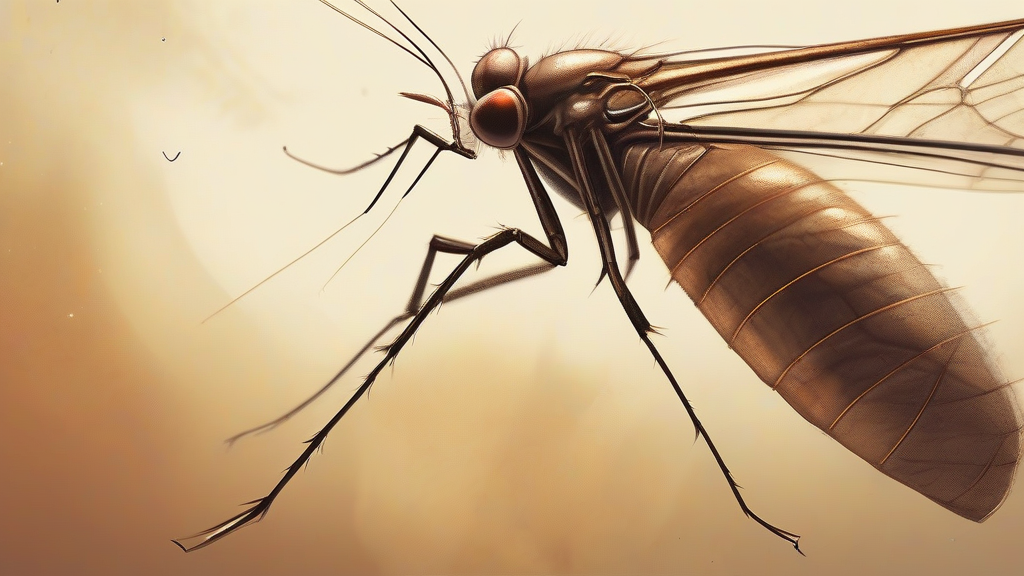
A cranefly is a delicate, long-legged flying insect belonging to the family Tipulidae, one of the largest families within the true flies. With its slender body, narrow wings, and extravagantly stilt-like legs, the cranefly is frequently mistaken for an oversized mosquito — yet it is completely harmless, lacking both the mouthparts and the appetite to bite. In Britain it is affectionately known as the 'daddy longlegs', a term Americans apply instead to certain spiders, making the word a small case study in regional divergence. The adult lives briefly, often just long enough to mate, while its larval stage — the grey-brown 'leatherjack' — feeds on grass roots and can trouble gardeners and turf farmers. The word itself is transparently compound, joining 'crane' (the long-legged wading bird whose silhouette the insect evokes) with 'fly'. Whether encountered indoors on a late-summer evening or in a meadow, the cranefly embodies a gentle irony: an insect built like a scarecrow that poses no threat whatsoever.
nounA slender, long-legged two-winged fly of the family Tipulidae, often mistaken for an oversized mosquito but entirely harmless to humans. Its larvae, known as leatherjackets, feed on plant roots and can damage lawns and crops.
- Any long-legged, weak-flying insect of the dipteran family Tipulidae.
"A cranefly blundered against the kitchen window, all legs and no menace."
"A cranefly spent the evening bumping gently against the lampshade."
"Birds flock to the lawn in autumn to feast on craneflies and their leatherjacket larvae."
"She watched a cranefly rest on the curtain, its impossibly long legs splayed at every angle."
Standard pluralization follows the regular pattern for compound nouns ending in 'fly': change the y to -ies.
"By September the meadow was thick with mating craneflies."
The gangly cranefly looks like a monster mosquito, but it couldn't bite you even if it tried — many adults barely eat at all.
Reviewed by Deb Chak, Editor. AI-assisted content curated by RJS Tech Solutions LLP.
Etymology of cranefly
The word 'cranefly' is a straightforward English compound formed from 'crane', the long-legged bird, and 'fly', reflecting the insect's resemblance to the wading bird's spindly form. The element 'crane' descends from Old English 'cran', which has cognates in other Germanic languages such as German 'Kranich' and Dutch 'kraan'. The compound itself became established in English by the early modern period, though the insect had earlier been called simply 'daddy longlegs' in British usage.
How cranefly is actually used
The word is neutral in register and common in both everyday speech and entomological writing. Regional naming varies sharply: British speakers often call it 'daddy longlegs', whereas American speakers reserve that name for harvestmen or cellar spiders, so context matters when translating between varieties of English.
Easily confused with cranefly
Despite its mosquito-like appearance, a cranefly cannot bite or sting and does not feed on blood.
In Britain 'daddy longlegs' means the cranefly itself, while in North America it usually refers to the unrelated harvestman spider or cellar spider.