
What does horsefly mean?
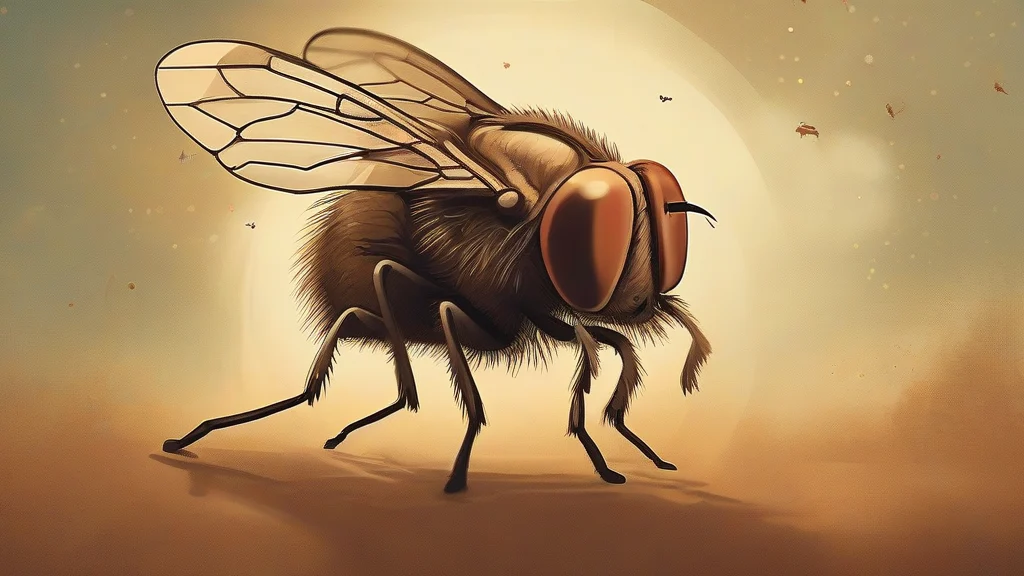
A horsefly is a large, robust fly whose bite can be sudden, painful, and irritating. The name refers to the fly’s association with horses and other large mammals, although horseflies do not feed exclusively on them. Females of the family Tabanidae puncture the skin and consume blood, while males generally feed on nectar and do not bite. In everyday figurative use, a horsefly can describe an insistent nuisance or an irritating person. The word is also familiar from outdoor experiences such as hiking, gardening, and working around livestock, where a painful bite may be followed by swelling and prolonged itching. Although the term is sometimes confused with the housefly or botfly, its characteristic combination of size, speed, and blood-feeding behavior distinguishes it from both.
nounA any of various large, fast-flying flies, especially those of the family Tabanidae, whose females have piercing mouthparts and can deliver painful bites to humans and other mammals.
- Any of various large flies of the family Tabanidae, particularly the females of which bite humans and other mammals.
- By extension, a person or thing that behaves like a persistently irritating pest.
"A horsefly settled on the back of the grazing mare."
"The horsefly was so persistent that the hiker kept swatting at it."
"His sales pitch was dismissed as a line of sales talk that would not let the prospect go."
The standard plural is “horseflies,” with “horse” changing to “horse” plus “-flies.”
"Horseflies were circling the horses near the pasture gate."
Unlike the familiar housefly, a female horsefly is a blood-feeder: she needs a blood meal to support the development of her eggs.
Reviewed by Deb Chak, Editor. AI-assisted content curated by RJS Tech Solutions LLP.
Where does horsefly come from?
“Horsefly” is a compound formed from “horse” and “fly,” reflecting the fly’s association with grazing animals and livestock. Its related vocabulary includes words such as “equine,” “equestrian,” and “equitable,” all of which ultimately derive from Latin equus, meaning “horse.” The compound remains a common name for the large biting flies in the family Tabanidae.
Related word forms
How horsefly is actually used
In its literal sense, the term is usually used for flies of the family Tabanidae. The figurative sense, meaning an irritating nuisance, is informal and less common.
Easily confused with horsefly
A horsefly is a large blood-feeding fly that bites mammals, whereas a housefly is the common household fly that is mainly attracted to food and waste.
A horsefly bites exposed skin and feeds on blood, while a botfly typically deposits eggs on a host and whose larvae develop in or on the host.