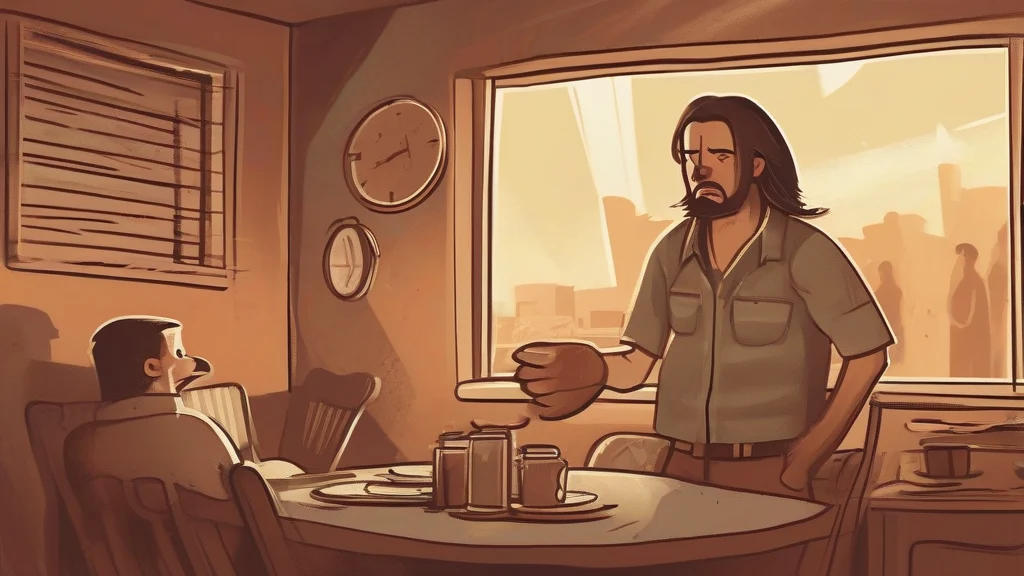
What does crankiness mean?
Crankiness is the quality of being cranky — that is, irritable, grouchy, or easily annoyed. It names a mood rather than a character flaw: someone's crankiness typically flares up when they are tired, hungry, uncomfortable, or out of sorts, and it passes once the underlying cause is addressed. The word appears most often in informal contexts, from descriptions of sleepy toddlers to jokes about colleagues before their first coffee. Its tone is generally mild and even affectionate; calling someone's behavior crankiness suggests grumpiness that is tolerated or forgiven rather than serious anger. Related forms include the adjective cranky and the adverb crankily. Because it captures such a universal human experience, crankiness is a useful everyday word for describing low-grade bad temper without overstating it.
nounThe state or quality of being cranky; irritability or bad-tempered grumpiness, especially of a mild, temporary kind.
- A temporary state of irritability or ill temper in a person.
- A tendency toward frequent irritability as a general trait or disposition.
"His crankiness before his morning coffee is legendary around the office."
"Lack of sleep turned her usual patience into unmistakable crankiness."
"The toddler's crankiness was a sure sign he had missed his nap."
Rarely pluralized; the word is almost always used as an uncountable mass noun referring to an abstract quality or mood.
"The letter catalogued the patient's various crankinesses over the years."
The 'crank' in crankiness may come from an old sense of a crank as a whimsical twist or eccentric turn — so a cranky person is, quite literally, a bit off-kilter.
Reviewed by Deb Chak, Editor. AI-assisted content curated by RJS Tech Solutions LLP.
Etymology of crankiness
Crankiness derives from the adjective 'cranky', formed with the suffix '-y', whose exact origin is uncertain. It is generally linked to the noun 'crank' — both the mechanical device for turning motion and its figurative use for an eccentric or whimsical person, a sense recorded from around the early 17th century. The extended form 'crankiness' developed later as English speakers needed a noun to name this familiar irritable state.
Related word forms
How crankiness is actually used
Informal to neutral in register; common in everyday conversation and parenting talk rather than formal writing. It usually connotes a passing, forgivable bad mood rather than deep-seated hostility.
Easily confused with crankiness
'Cranky' is the adjective describing an irritable mood, while 'crankiness' is the noun naming that mood itself.