What does croaking mean?
Croaking refers to the deep, harsh, guttural sound characteristic of frogs and ravens — a dry, rasping vocalization produced by vibration rather than clear tone. It also describes a similar quality in the human voice: someone who is ill, exhausted, frightened, or elderly may speak with a croaking rasp. The word functions both as a noun ('the croaking of the swamp at night') and as the present participle of the verb 'croak'. Its connotations are generally unpleasant or eerie: croaking suggests hoarseness, decay, foreboding, or the uncanny chorus of wetlands after dark. Informally, especially in British English, 'croaking' can even be slang for dying, reflecting the grim association between the raven's croak and death. Whether describing amphibians, birds, or strained voices, the word vividly captures any low, broken, grating sound.
A deep, harsh, guttural sound such as that made by a frog or raven; a low, hoarse vocalization.
"The only sound was the intermittent croaking of bullfrogs across the pond."
Usually used in the singular with an article, often followed by 'of' naming the animal or source.
Present participle of 'croak': to make a deep, hoarse, rasping sound; to utter in such a voice; (informal) to die.
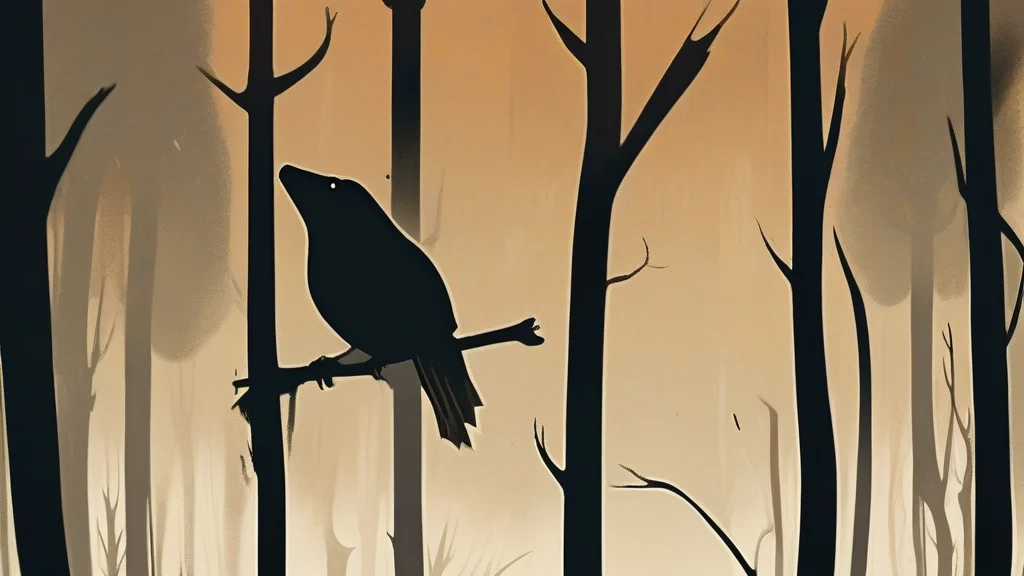
"The old raven sat croaking warnings from the bare branch."
In formal writing, prefer neutral alternatives to the slang sense of dying.
Rarely used; the singular 'croaking' is standard even when referring to multiple instances of the sound.
"The croakings of the swamp carried through the still night air."
Frogs don't actually say 'ribbit' in most of the world — that famous call belongs almost entirely to American Hollywood soundtracks, and everywhere else their 'croaking' sounds completely different.
Reviewed by Deb Chak, Editor. AI-assisted content curated by RJS Tech Solutions LLP.
Etymology of croaking
'Croaking' derives from 'croak', which entered English in the Middle English period as 'croke', likely imitative of the harsh sound itself — one of many onomatopoeic words for animal noises. Some etymologists connect it to Old Norse 'krāka', meaning crow, reinforcing its long association with corvids and other raucous creatures. The extended sense of 'croak' meaning 'to die', attested by the nineteenth century, arose from grim folk association between the death-rattle and the bird's cry. The noun 'croaking' simply applies standard gerundive formation to the verb.
Related word forms
How croaking is actually used
As a noun it typically appears in the singular with an article ('the croaking of frogs'). As a verb form it is simply the present participle of 'croak'. In informal British usage 'croaking' can mean dying, but this sense is colloquial and potentially flippant — avoid it in formal contexts. The word carries mildly negative or unpleasant connotations, evoking something hoarse, grating, or ominous.
Easily confused with croaking
'Crowing' is a rooster's clear, shrill crow or a boastful expression of triumph, whereas 'croaking' is a low, harsh frog-like sound.
'Groaning' expresses pain, displeasure, or effort with a sustained moaning sound, while 'croaking' is a dry, rasping, broken sound.