
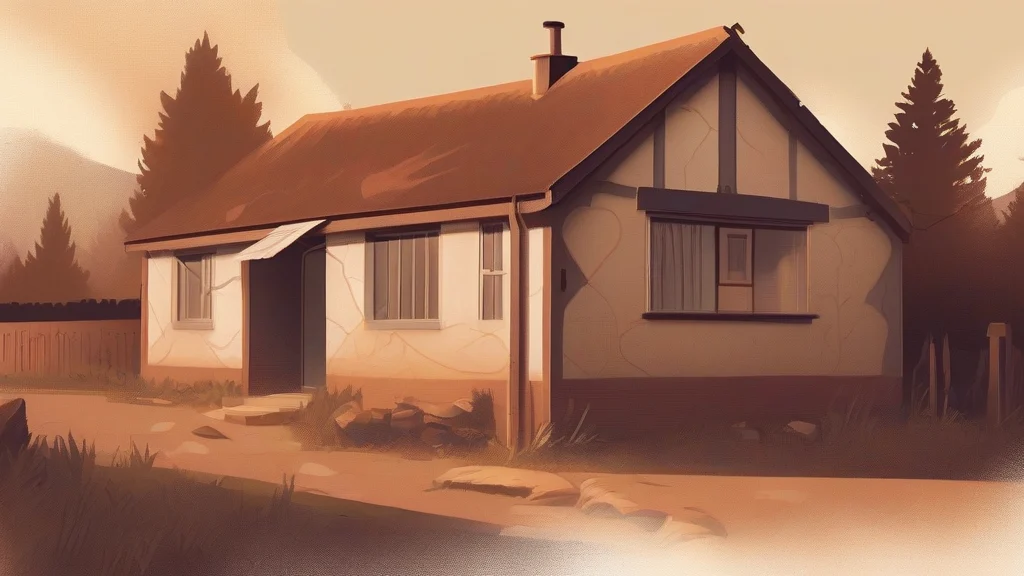
What does curtilage mean?
Curtilage is a legal term for the area of land, buildings, and structures that immediately surrounds a dwelling house and falls within its boundaries or enclosures. Though the word sounds obscure, it marks an important line: the space where the privacy protections attached to one's home extend outward. A garage, garden, or shed within the curtilage is generally treated as part of the residence itself, so in criminal law, police typically need a warrant to search there just as they would inside the house. Courts determine what counts as curtilage by considering factors such as proximity to the home, whether the area is fenced or otherwise enclosed, how it is used, and what steps the owner has taken to shield it from public view. The term also appears in planning law and in historical descriptions of manors and estates. Derived ultimately from Latin words relating to an enclosed courtyard, curtilage remains a formal term, encountered chiefly by lawyers, judges, historians, and students of constitutional rights.
nounThe area of land and buildings immediately surrounding a dwelling house and enclosed within its boundary, treated legally as part of the home itself.
- In property and criminal law: the enclosed land and outbuildings around a dwelling that are legally treated as part of the home for purposes such as search warrants and privacy rights.
"Under the Fourth Amendment, officers needed a warrant before entering the shed within the house's curtilage."
"The barn stood well within the curtilage of the farmhouse, so searching it required the same warrant as searching the house itself."
"Medieval manor records often described the curtilage — the yard and gardens enclosed around the hall."
Rarely pluralized; the plural appears mainly when referring to the curtilages of multiple properties.
"The survey mapped the curtilages of all the listed buildings in the parish."
Your garden fence doesn't just keep out trespassers — in law it defines the 'curtilage', the zone where your constitutional privacy protections extend beyond your front door.
Reviewed by Deb Chak, Editor. AI-assisted content curated by RJS Tech Solutions LLP.
Etymology of curtilage
Curtilage entered English in the late medieval period through Anglo-Norman French, deriving ultimately from the Latin 'cohors' (later 'cors'), meaning an enclosed yard or courtyard — the same root that gave English 'court' and, more distantly, 'courtesy'. The Old French form referred to the ground enclosed around a dwelling, and the word was absorbed into English legal usage to describe the land attached to and enclosed about a house. Its meaning has remained remarkably stable across the centuries: the enclosed space belonging to a dwelling rather than open fields beyond it.
How curtilage is actually used
A formal, technical term used almost exclusively in legal contexts — property law, criminal procedure, and planning regulations. It carries no everyday conversational use, though it appears in historical writing about estates and manors. The precise boundary of a curtilage can be legally significant, so courts weigh factors like proximity, enclosure, and use when deciding whether a structure falls within it.
Easily confused with curtilage
Curtail means to cut short or reduce something, while curtilage is a noun denoting the land enclosing a dwelling.