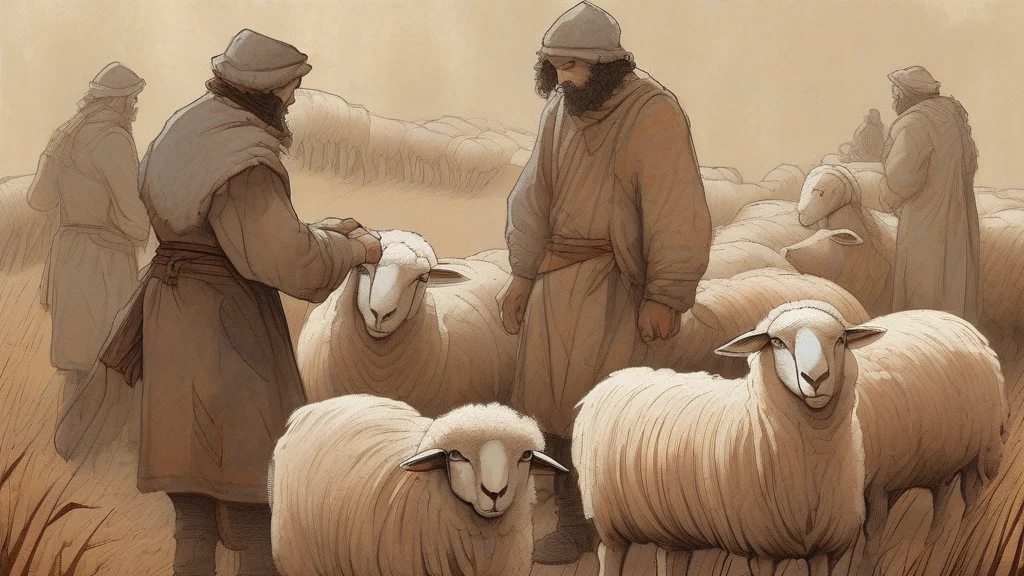
What does dagging mean?
Dagging is chiefly an agricultural term referring to the removal of soiled, matted wool — known as dags — from around a sheep's hindquarters and tail. Farmers perform this routine task to maintain hygiene in the flock, since dung-caked wool attracts blowflies whose larvae cause flystrike, a painful and potentially fatal condition. The word belongs primarily to British and Commonwealth sheep-farming vocabulary, where it sits alongside related practices such as crutching. A second, older sense of the term describes the ornamental slashed edges on medieval clothing: tailors would cut fabric into pointed or zigzag shapes, called dagges, to create decorative fringes on hems and sleeves. Today this historical meaning survives mainly in costume history and discussions of medieval fashion. In everyday speech, dagging is rare outside rural and veterinary circles, but within its proper context it is a precise, well-established term for an essential piece of animal husbandry.
The act of cutting soiled or matted wool from around a sheep's hindquarters; also, a decorative slashed edge on medieval clothing.
"Dagging is best done before warm weather arrives, when flies become a serious threat to the flock."
Mostly heard in British and Commonwealth farming contexts.
Present participle of 'dag': to trim soiled wool from a sheep's rear end.
"She was out in the paddock all morning, dagging the lambs ahead of shearing week."
Used transitively, typically with the sheep as direct object.
Long before fashion borrowed 'dagging' for those zigzag slashes on medieval sleeves, it was humble shepherd-speak for tidying up a sheep's backside — and it's still saving flocks from flystrike today.
Reviewed by Deb Chak, Editor. AI-assisted content curated by RJS Tech Solutions LLP.
Etymology of dagging
The verb 'dag' derives from Middle English, ultimately of Scandinavian origin, related to words meaning a dangling or hanging tuft or lock — here, the clotted wool hanging from a sheep's rear. The noun 'dagging' is formed straightforwardly from that verb. The separate sense of 'dagge', meaning a slashed point or jagged edge on medieval cloth, arose in late Middle English and may be connected to the same Germanic root suggesting something ragged or torn.
Related word forms
How dagging is actually used
Primarily a British and Commonwealth agricultural term among sheep farmers; in modern use it appears mostly in livestock husbandry contexts. The historical sense relating to slashed garment edges is now largely confined to discussions of medieval costume.
Easily confused with dagging
Docking is the removal of an animal's tail, whereas dagging is merely trimming soiled wool around the hindquarters.
Dabbing means pressing lightly with quick touches; dagging specifically refers to trimming dirty wool from sheep.