What does decanter mean?
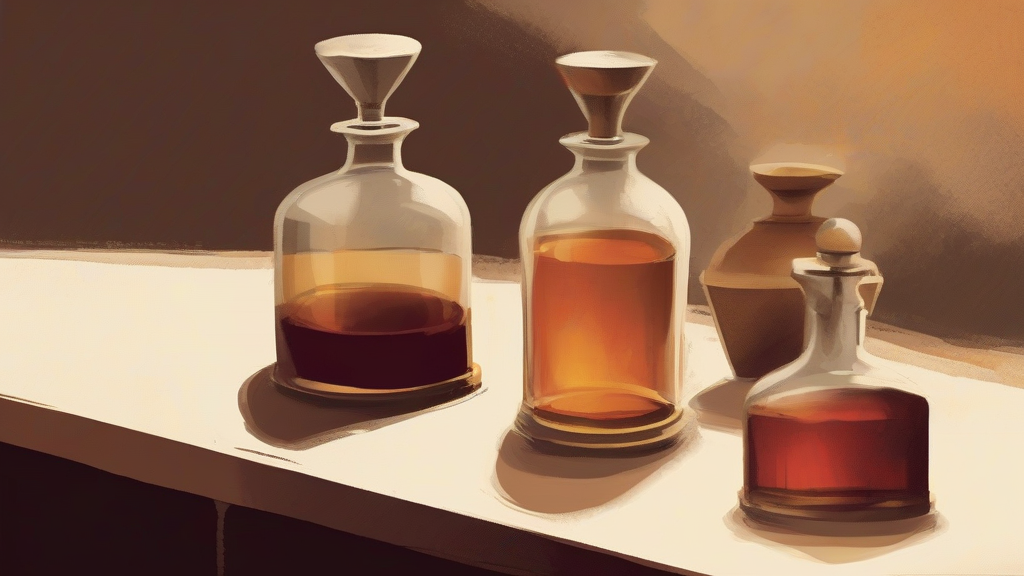
A decanter is a stoppered vessel, typically made of clear glass or cut crystal, used for serving wine, port, whisky, or other liquors at the table. Its practical purposes are twofold: to separate the poured liquid from any sediment left in the original bottle, and to aerate wine by exposing it to air in a wide-bodied container. Beyond function, decanters have long been objects of craftsmanship and display — cut-glass and silver-mounted examples were staples of Victorian and Georgian dining rooms, and the image of a spirit decanter on a sideboard remains a symbol of traditional hospitality. The word derives from the verb "to decant," meaning to pour liquid gently from one container to another, itself borrowed from French. Today the term appears most often in contexts of wine appreciation, formal entertaining, and antique collecting, where a fine decanter is valued as much for its beauty as its utility.
nounA decanter is a stoppered glass or crystal vessel used for serving wine, spirits, or other liquids, typically one that allows sediment to settle and the contents to be poured gracefully at the table.
- An ornamental stoppered glass vessel, especially of cut glass or crystal, used for serving wine, whisky, port, or other beverages at the table.
- (More generally) Any vessel into which liquid is decanted, including laboratory or kitchen containers used to separate liquid from sediment.
"She poured the port from a cut-crystal decanter into his glass."
"He uncorked the Bordeaux and let it breathe in a wide-bottomed decanter."
"The butler refilled the sherry decanter before the guests arrived."
Standard English plural, used both for multiple individual vessels and for matched sets of serving decanters.
"The cabinet displayed a pair of Georgian decanters alongside the family silver."
That heavy crystal ship's decanter on your grandfather's sideboard descends from an age when fine wine arrived in barrels — and had to be poured off its sediment before it could be served.
Reviewed by Deb Chak, Editor. AI-assisted content curated by RJS Tech Solutions LLP.
Etymology of decanter
The word "decanter" comes from the verb "decant," which English borrowed in the early 17th century from French "décanter." The French verb ultimately traces back to Medieval Latin "decantare," formed from Latin "de-" (from, away) plus "canthus" or related to "canalis," referring to the spout or rim of a vessel — essentially, to pour from the lip of one container into another. Cognates include French "décanter" and Italian "decantare." The noun "decanter" arose shortly afterward to name the vessel into which wine was so poured.
Related word forms
How decanter is actually used
"Decanter" carries connotations of formality and tradition — it evokes dining rooms, sideboards, after-dinner drinks, and polished table service rather than casual drinking. In British usage especially, a "decanter of port" or "sherry decanter" is a fixture of formal hospitality. The word is almost exclusively used for vessels meant for display and table service; a plain unstoppered carafe for water would not usually be called a decanter. The plural "decanters" can also refer collectively to a set of such vessels.
Easily confused with decanter
A decanter is a vessel for pouring liquid, while decent is an adjective meaning satisfactory or respectable; the two share only a superficial resemblance in spelling.
A decadent person or thing shows moral decline or luxurious self-indulgence, whereas a decanter is simply a container for decanting wine or spirits.