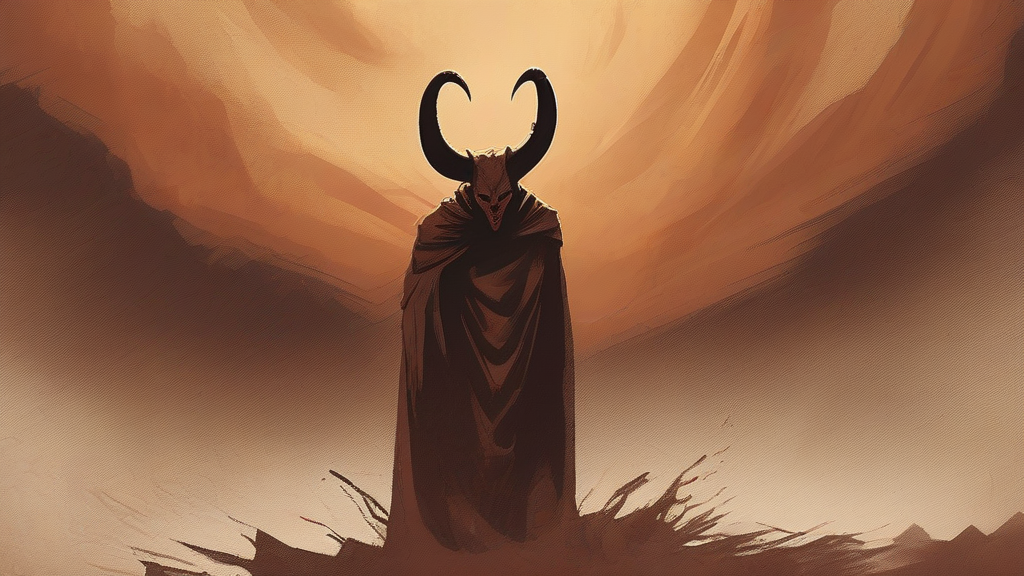
What does deil mean?
"Deil" is the Scots and Northern English form of "devil," preserving a distinctive vowel that reflects centuries of regional pronunciation. Like its standard counterpart, it can denote Satan himself, but in everyday Scots usage it more often describes a mischievous person, child, or animal, or serves in colorful exclamations such as "deil tak the hindmost" (devil take the hindmost) and "the deil a bit." The word is inseparable from Scottish literary tradition: Robert Burns employed it frequently, notably in poems like "Address to the Deil," where the devil is treated with a mixture of fear and wry familiarity rather than pure dread. Today "deil" survives mainly in Scotland, in dialect writing, and in quotations from older verse. For readers elsewhere, encountering it signals a deliberate Scottish voice — earthy, comic, and steeped in tradition — making it a small but vivid marker of linguistic heritage.
The devil; Satan (Scots and Northern English dialect).
""The deil was aye a gentleman," runs the old Scots saying."
A mischievous, wicked, or troublesome person or thing.
"That cat's a wee deil, always knocking things off the shelf."
Used in exclamations and emphatic phrases, e.g., "the deil a bit" (not at all).
""The deil a one of them would help," she said, shaking her head."
Rarely pluralized except when referring to multiple mischievous individuals.
"The bairns were little deils at the party."
Robert Burns used it freely — when Burns wrote of the "deil," he was giving the devil his distinctly Scottish voice.
Reviewed by Deb Chak, Editor. AI-assisted content curated by RJS Tech Solutions LLP.
Etymology of deil
"Deil" derives, like "devil," from Old English "dēofol," which was borrowed from Latin "diabolus," itself taken from Greek "diábolos," meaning "slanderer" or "accuser." The distinct Scots vowel reflects regular sound changes in northern Middle English and Scots rather than a separate origin. Cognates across European languages — including French "diable" and Italian "diavolo" — all trace back to the same Greek root, which also gives English "diabolical."
How deil is actually used
"Deil" belongs chiefly to Scots and older Northern English speech and literature; outside Scotland it appears mainly in literary quotation, especially Robert Burns, or when writers deliberately adopt Scots register. It carries a rustic, often humorous tone rather than genuine profanity in most modern uses.
Easily confused with deil
"Deil" is simply the Scots/Northern English dialect form of "devil" — same meaning, different regional pronunciation and spelling.
"Deal" means to distribute or an agreement, whereas "deil" refers to the devil or a wicked/mischievous person.
A deity is a god or divine being, while a deil is specifically a dialect word for the devil.