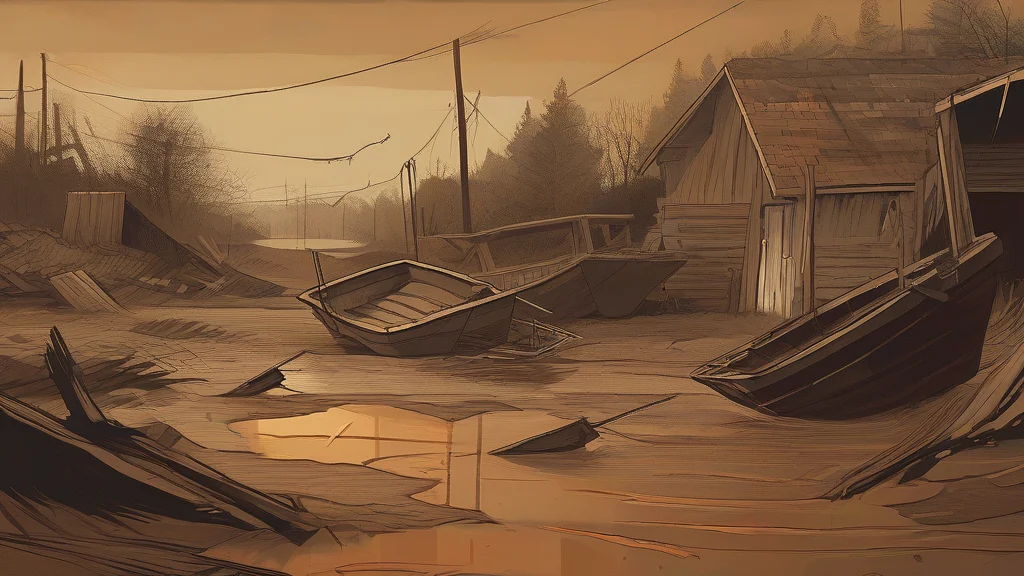
What does depredation mean?
Depredation refers to the act of preying upon, plundering, or destructively attacking something — whether a marauding army pillaging a town, vermin raiding a granary, or human activity stripping a landscape of its resources. It is most often encountered in the plural form, as in "the depredations of time" or "the depredations of invaders," where it captures the accumulated ravages inflicted over a period. The word carries a formal, even literary tone, lending gravity to writing about destruction, exploitation, or loss. Its Latin root depraedari, meaning "to plunder," connects it to words like predation and predatory, underscoring its sense of a predator taking what it wants without regard for the victim. Because it resembles the far more common word "deprecation," writers should take care not to confuse the two: one condemns, the other devours. Depredation remains valuable for describing large-scale or sustained damage with precision and force.
nounThe act of preying upon or plundering; destructive or predatory attack, especially the damaging or pillaging of property, resources, or a place.
- Destructive or predatory action; the act of plundering, ravaging, or laying waste to something.
- (Usually in plural) The damaging effects or ravages of such action, often over time.
"Years of depredation by invading armies left the countryside impoverished."
"Farmers complained of the nightly depredations of foxes on their poultry."
"The castle had survived centuries of war, but modern pollution was proving a subtler agent of depredation."
The plural is more common than the singular in actual usage, typically in the phrase "the depredations of" followed by the damaging agent.
"The forest has borne the depredations of loggers for decades."
Despite looking like "deprecation," depredation has nothing to do with disapproval — it's what wolves and armies do when they strip something bare.
Reviewed by Deb Chak, Editor. AI-assisted content curated by RJS Tech Solutions LLP.
Etymology of depredation
Depredation derives from the Latin verb depraedari, formed from de- (indicating removal) and praeda ("prey" or "booty"), the same root that gives us predation and predatory. The word entered English in the early seventeenth century, likely via French déprédation or directly from Latin. Its cognates preserve the image of a predator seizing prey, which is why depredation retains connotations of rapacious, plundering destruction rather than mere accidental damage.
Related word forms
How depredation is actually used
Formal and somewhat literary register; rarely used in casual speech. Most frequently appears in the plural ("the depredations of...") when describing cumulative damage caused by an agent such as war, pests, time, or exploitation.
Easily confused with depredation
"Deprecation" means disapproval or (in computing) marking something as obsolete, while "depredation" means plundering or destruction — they differ by one letter but are unrelated in meaning.