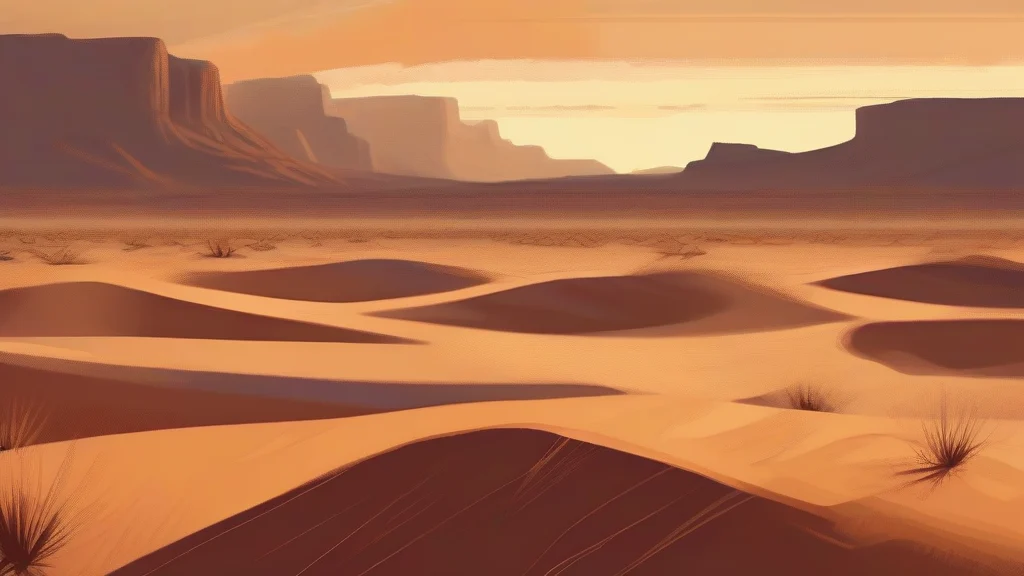
What does desertlike mean?
"Desertlike" is an adjective describing anything that resembles a desert — dry, hot, barren, or conspicuously lacking vegetation, water, or signs of life. It applies both literally and figuratively. Literally, it characterizes landscapes and climates that share a desert's defining traits, as in "a desertlike stretch of scrubland" or "desertlike summer temperatures." Figuratively, it conveys emptiness or desolation, so an abandoned building, a silent street at dawn, or a neglected garden might all be called desertlike when they feel drained of vitality. The word is formed transparently from "desert" plus the suffix "-like," which makes its meaning immediately accessible to readers. It belongs chiefly to descriptive and journalistic prose — travel writing, weather reporting, nature writing — where it lends vividness without formality. Its closest synonyms include "arid," "barren," "desolate," and "parched," though none captures the specific comparison to a desert that this word makes directly.
adjectiveResembling or characteristic of a desert, especially in being extremely dry, barren, or devoid of life or activity.
- Literally resembling a desert in climate or terrain: extremely dry, hot, and sparsely vegetated.
- Figuratively barren or empty of activity, interest, or inhabitants, as though drained of life.
"The abandoned mining town had a desertlike stillness, broken only by the wind."
"By mid-afternoon the asphalt parking lot had become desertlike, radiating heat into the shimmering air."
"The once-bustling shopping street now felt desertlike after the factory closed and most residents moved away."
One extra 's' is the difference between a parched wasteland and something that tastes like chocolate cake — desertlike vs. dessertlike is one of English's most tempting typos.
Reviewed by Deb Chak, Editor. AI-assisted content curated by RJS Tech Solutions LLP.
Etymology of desertlike
"Desertlike" is a modern English compound formed from the noun "desert" and the adjectival suffix "-like." The noun "desert" derives via Old French "desert" from Late Latin "desertum," meaning "an abandoned place," itself from Latin "deserere," "to forsake or abandon" (from "de-" + "serere," "to join"). The suffix "-like" comes from Old English "-lic," meaning "having the body or form of." As a transparent formation, the compound's history follows that of its parts rather than having an independent documented origin.
How desertlike is actually used
"Desertlike" is a neutral, descriptive compound adjective used mostly in written or journalistic prose rather than everyday speech. It carries no inherent negative judgment beyond what its context supplies — it can describe genuine desert climates or simply evoke dryness, emptiness, or harshness figuratively. It typically appears attributively ("a desertlike climate") but also occurs predicatively ("the plain turned desertlike by late summer").
Easily confused with desertlike
"Dessertlike" means resembling a sweet course served after a meal, while "desertlike" means resembling a dry, barren wasteland.