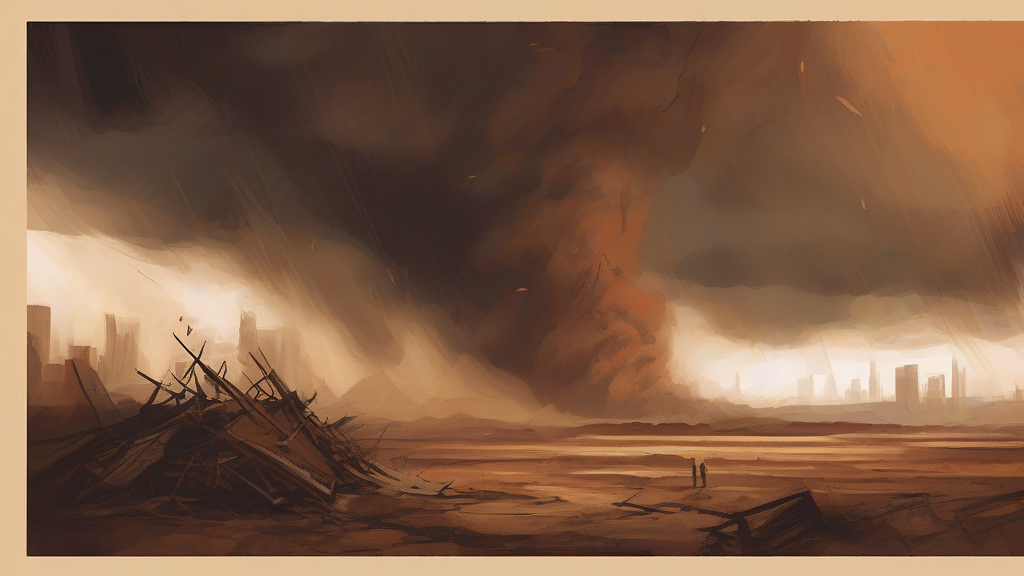
What does devastation mean?
Devastation is a noun describing the complete destruction of something, whether a landscape flattened by a storm, a city reduced to rubble by war, or the profound emotional collapse that follows catastrophic loss. The word derives from the Latin devastare, meaning to lay waste, and entered English in the early seventeenth century, initially applied to the ravages of armies upon countryside and towns. Today it operates on two closely related levels: the physical sense refers to wholesale ruin left by disasters such as earthquakes, fires, and floods, while the figurative sense conveys overwhelming grief or shock, as in feeling devastation at news of a death. Because it implies totality rather than partial harm, devastation is a markedly stronger term than damage or destruction alone. It appears most often in journalism, disaster reporting, and personal narrative, typically paired with words like widespread, utter, or scene of.
nounThe act or process of destroying something completely; the state of being severely damaged, ruined, or laid waste. It also denotes the overwhelming grief, shock, or emotional distress caused by such destruction or by a devastating loss.
- Complete destruction or severe physical damage to a place, structure, or area.
- Overwhelming emotional shock, grief, or distress caused by a devastating event or loss.
"The hurricane left a trail of devastation along the entire coastline."
"The earthquake caused widespread devastation across the region."
"She felt utter devastation when she learned of his death."
English borrowed 'devastation' from Latin devastare — literally to lay waste — and for centuries it described ravaged battlefields before it ever described broken hearts.
Reviewed by Deb Chak, Editor. AI-assisted content curated by RJS Tech Solutions LLP.
Etymology of devastation
Devastation comes from the Latin verb devastare, formed from de- (indicating removal or undoing) and vastare (to lay waste), itself rooted in vastus, meaning empty or desolate. English adopted the noun in the early seventeenth century, when it was commonly used of lands pillaged by invading armies. Its Latin cousins include invasion and evacuation, which share the same deep root family through vastus and related forms.
Related word forms
How devastation is actually used
Devastation is an uncountable noun in standard usage and does not normally take a plural. It carries strong connotations of totality and irreversibility, making it more intense than mere damage or harm. Both its physical and emotional senses are common; the emotional sense frequently appears with intensifiers such as 'utter' or 'complete'.
Easily confused with devastation
Desolation emphasizes emptiness, bleakness, and abandonment of a place or spirit, while devastation stresses the violent act or result of destroying something.
Destruction is the general act of damaging or demolishing something, whereas devastation implies total ruin and often the emotional aftermath as well.