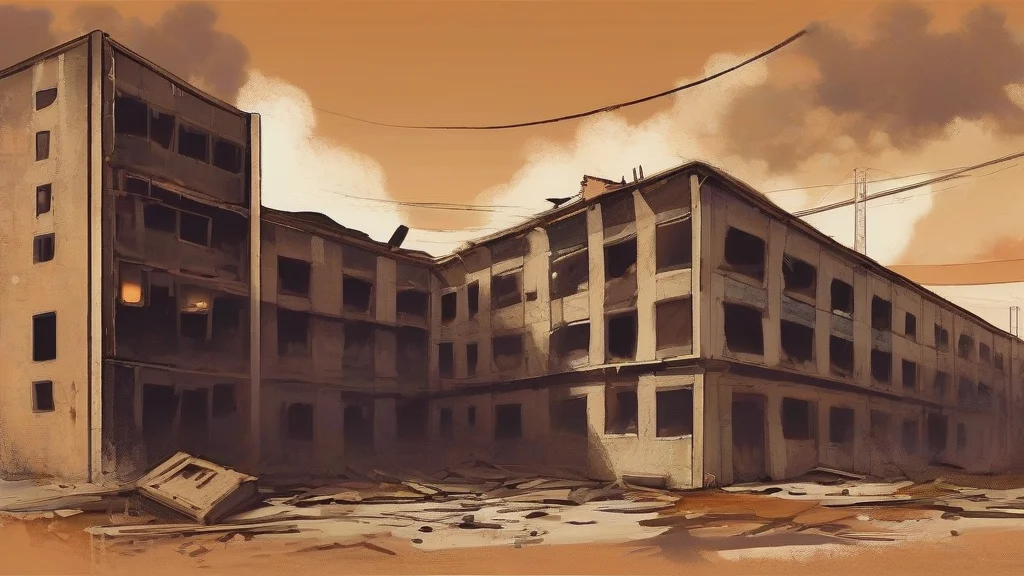
What does dilapidation mean?
Dilapidation is the condition of a building or structure falling into disrepair through neglect, age, or misuse. It most often appears in phrases such as 'in a state of dilapidation' or 'fallen into dilapidation', typically describing properties whose roofs, walls, or fittings have visibly deteriorated. The word has a formal register and is especially at home in legal and property contexts: in British English, 'dilapidations' refers to the specific damages a landlord may claim against a tenant who fails to maintain leased premises. Connoting slow, avoidable decay rather than sudden destruction, the term implies that neglect — not catastrophe — is to blame. Its etymology adds an appealing literalness: it derives from the Latin 'dilapidare', meaning to squander or scatter stones, as if a building were being dismantled stone by stone. This vivid origin makes dilapidation a precise and evocative choice over blunter words like 'damage' or 'decay'.
nounThe state of a building or structure falling into disrepair through neglect or age. In law, the wasting or damage done to property, especially by a tenant's failure to keep it in good repair.
- The state of being in disrepair or ruin, especially of a building or structure.
- (Law) Damage or waste done to property, particularly by a tenant failing to maintain it.
"The once-grand hotel had fallen into such dilapidation that its windows were boarded up and ivy consumed the façade."
"Years of neglect left the church in severe dilapidation, its roof leaking and stonework crumbling."
"The tenant was sued for dilapidations after vacating the flat with broken fixtures and damp walls."
The plural is chiefly used in legal contexts, particularly British property law, referring to items of damage or breaches of repair obligations for which a landlord may claim compensation.
"The landlord issued a schedule of dilapidations detailing every defect the outgoing tenants had failed to remedy."
'Dilapidation' comes from the Latin for 'throwing stones about' — literally scattering stones from a wall — which is exactly what happens when a building falls apart.
Reviewed by Deb Chak, Editor. AI-assisted content curated by RJS Tech Solutions LLP.
Etymology of dilapidation
Dilapidation derives from the Latin verb 'dilapidare', formed from 'di-' (apart) plus 'lapis' (stone), originally meaning to throw stones about or squander — as if scattering the stones of a building piecemeal. It entered English in the early modern period, around the late 15th to early 16th century, initially carrying the sense of wasteful expenditure before narrowing toward its modern sense of structural disrepair. It shares its root with 'dilapidate', a rarer English verb meaning to cause to fall into ruin, and more distantly with 'lapidary', relating to precious stones.
Related word forms
How dilapidation is actually used
Formal in register; common in legal contexts (especially British English, where 'dilapidations' as a plural noun refers specifically to damages claimed by landlords) and in architectural or heritage writing. The word carries connotations of gradual, often preventable decline rather than sudden destruction.
Easily confused with dilapidation
Depreciation refers to a decline in financial value of an asset, while dilapidation refers to physical decay or disrepair of a building or structure.