What does dishorn mean?
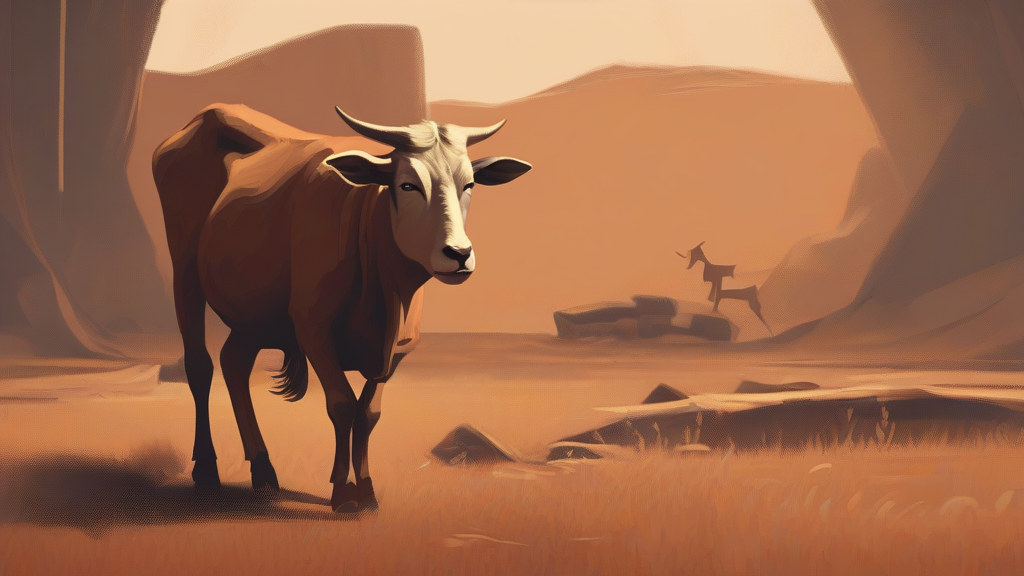
"Dishorn" is a transitive verb meaning to remove the horns from an animal, most commonly cattle or goats, whether by surgical disbudding, sawing, or breeding polled stock. By extension, the word has long been used figuratively to describe depriving a person, faction, or institution of its power, weapons, or capacity to do harm — one might say a treaty dishorned an aggressive state, or that reformers sought to dishorn a monopolistic corporation. The word is formed from the prefix "dis-" plus "horn," and it is now decidedly uncommon, surviving chiefly in older texts and literary prose; modern usage favors "dehorn" for the literal animal husbandry sense. When employed today, "dishorn" tends to signal either historical writing or a deliberately elevated register, giving the writer access to a vivid image: an opponent left not merely defeated, but physically stripped of the very instruments that made it dangerous.
verbTo deprive an animal of its horns; figuratively, to strip a person or institution of power, means of defense, or aggressive capacity.
- To remove the horns from an animal.
- (Figurative) To deprive a person, group, or thing of its strength, weapons, or means of resistance.
"The farmers agreed to dishorn the young bulls before they were turned out to pasture."
"The veterinary team was hired to dishorn the herd humanely before transport."
"The new constitution effectively dishorned the monarchy, leaving it with ceremonial power alone."
Before it faded into obscurity, "dishorn" did double duty: it could mean sawing the horns off a bull or metaphorically defanging your political rival.
Reviewed by Deb Chak, Editor. AI-assisted content curated by RJS Tech Solutions LLP.
Etymology of dishorn
"Dishorn" combines the prefix "dis-" (indicating removal or reversal) with "horn," a word of ancient Germanic origin found throughout the Germanic languages and ultimately traceable to the same Indo-European root that gave Latin "cornu." It emerged in English by the early modern period, when such transparent dis- formations were freely coined. Its Latin-rooted cousins include "unicorn" ("one-horn") and "corner" (originally a place where two walls or horns meet). The word has always been more at home in formal or figurative contexts than in everyday farm speech, which eventually preferred "dehorn."
How dishorn is actually used
"Dishorn" is rare in modern English and carries a literary or historical flavor. In contemporary agricultural contexts, "dehorn" is strongly preferred for the literal sense. The figurative sense — stripping an adversary of power — appears mostly in older political and rhetorical writing and lends a deliberately archaic tone.
Easily confused with dishorn
"Dehorn" is the standard modern term for removing horns from livestock, while "dishorn" is the older, rarer form carrying the same literal sense plus a figurative use meaning to strip someone of their power or defenses.