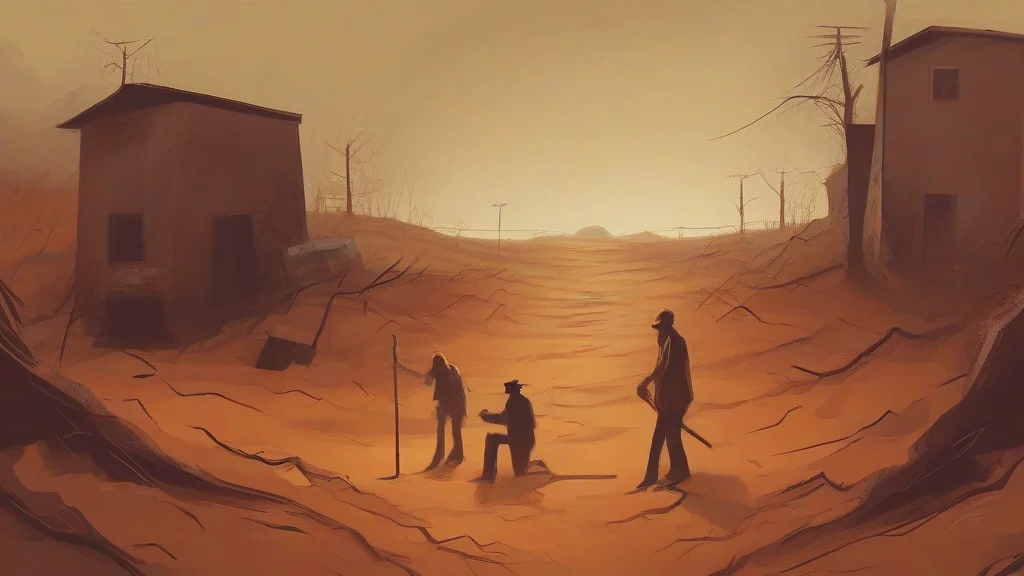
What does disinter mean?
"Disinter" is a formal verb meaning to dig up or remove something from the ground where it has been buried, most commonly used of human remains: authorities may disinter a body when new evidence requires further examination. Beyond its literal sense, the word also works figuratively, describing the revival of things long forgotten — a writer might disinter an old scandal, a historian disinter lost correspondence, or a politician's rivals disinter a dormant controversy. The word carries a somewhat grave, official, or literary tone and is rare in everyday conversation, with "dig up" serving as the ordinary informal equivalent. Its figurative use can carry a faintly critical edge, implying that what is being brought back into view might better have been left undisturbed. Formed from the prefix "dis-" plus "inter," meaning to place in the ground, it belongs to a small family of burial-related terms including "inter," "exhume," and "interment."
verbTo dig up or remove something, especially a dead body, from the ground; to unearth that which has been buried.
- To dig up or remove (a body) from the ground; to exhume.
- (Figurative) To bring back into notice or revive something forgotten — e.g. disinter an old dispute or a long-lost document.
"Archaeologists carefully disinterred the remains to study the burial customs of the period."
"The court granted permission to disinter the body so that fresh forensic tests could be carried out."
"In his memoir, the journalist disinters a decades-old scandal that most editors had preferred to leave buried."
From exhuming centuries-old skeletons to digging up long-forgotten political scandals, "disinter" does double duty for bodies and buried truths alike.
Reviewed by Deb Chak, Editor. AI-assisted content curated by RJS Tech Solutions LLP.
Etymology of disinter
"Disinter" was formed in English by combining the Latin-derived prefix "dis-" (indicating reversal or removal) with the verb "inter," itself from Latin "interrare," meaning "to put in the earth." The root goes back to Latin "terra," meaning "earth" or "land." The word emerged in English around the early 17th century, as did other burial-related terms built on the same stem, such as "inter" and "disinterment." Cognate forms sharing the "terra/terre" root include "terrain," "terrestrial," and "territory."
How disinter is actually used
Formal to literary in register; rarely used in casual speech. In its figurative sense it often carries a slightly critical connotation, suggesting something is being dragged up that would be better left forgotten.
Easily confused with disinter
"Disinterest" means lack of interest or impartiality, while "disinter" means to dig up something buried.
"Intern" means to confine someone (often as a prisoner), while "disinter" means to remove something from burial in the ground.