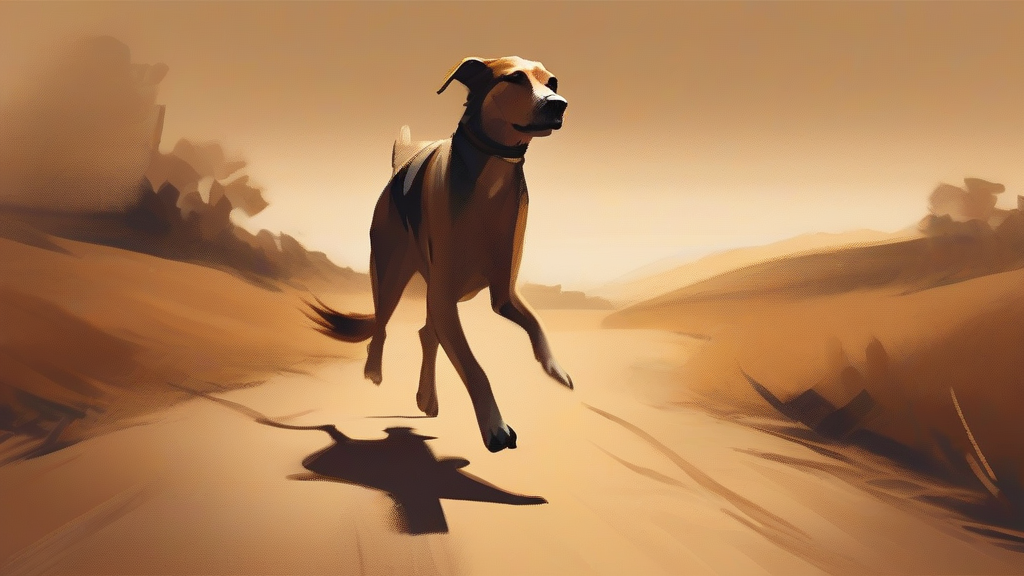
What does dogtrotted mean?
To have dogtrotted is to have moved at a dogtrot — that steady, easy gait sitting between a walk and a run. The term evokes the tireless, rolling trot of a dog, and it has long been used of people who cover great distances on foot by settling into this economical rhythm rather than exhausting themselves with running. In the American South especially, the dogtrot carried connotations of practical endurance: travellers, couriers, and soldiers who dogtrotted could keep going for miles at a time. The word appears almost exclusively in narrative writing, lending a rustic, unhurried flavour to descriptions of movement. Though rarely heard in everyday conversation, it remains useful whenever a writer wants to suggest sustained, unglamorous progress — someone dogtrotted has neither strolled nor sprinted, but found the patient middle path between them.
verb (past tense and past participle of 'dogtrot')Moved at a steady, easy trotting pace — a moderate gait between walking and running; in the American South, often refers to the shuffling, unhurried gait traditionally associated with travelling on foot over long distances.
- Past tense of dogtrot: to travel or move at an easy, steady trotting pace, especially as a sustainable long-distance gait.
- (Less common) To proceed in a leisurely but continuous manner, as if unhurried yet purposeful.
"She dogtrotted along the ridge trail, covering miles without ever breaking into a run."
"The messenger dogtrotted across the valley to deliver the news before nightfall."
"They simply dogtrotted through the airport concourse, unbothered by the crowds around them."
The dogtrot isn't about dogs at all — it's a human's secret weapon for covering huge distances on foot without ever tiring, one easy shuffle at a time.
Reviewed by Deb Chak, Editor. AI-assisted content curated by RJS Tech Solutions LLP.
Etymology of dogtrotted
The compound 'dogtrot' joins 'dog', used here in its old sense of something base, ordinary, or characteristic of the animal, with 'trot', a Middle English word of uncertain ultimate origin that described a horse's moderate pace by the sixteenth century. The noun dogtrot — the gait itself — was well established in English before the verb followed, and both became particularly associated with the American frontier and South, where the dogtrot was prized as the efficient gait of long-distance walkers. The past tense 'dogtrotted' is a straightforward regular formation from the verb.
Related word forms
How dogtrotted is actually used
Informal and somewhat folksy in register; most at home in narrative prose describing rural life, hiking, or historical settings. The verb form is far less common than its noun counterpart.
Easily confused with dogtrotted
'Dogtrotted' describes moving at a trotting pace, while 'dog-tired' means extremely exhausted.