What does dormouse mean?
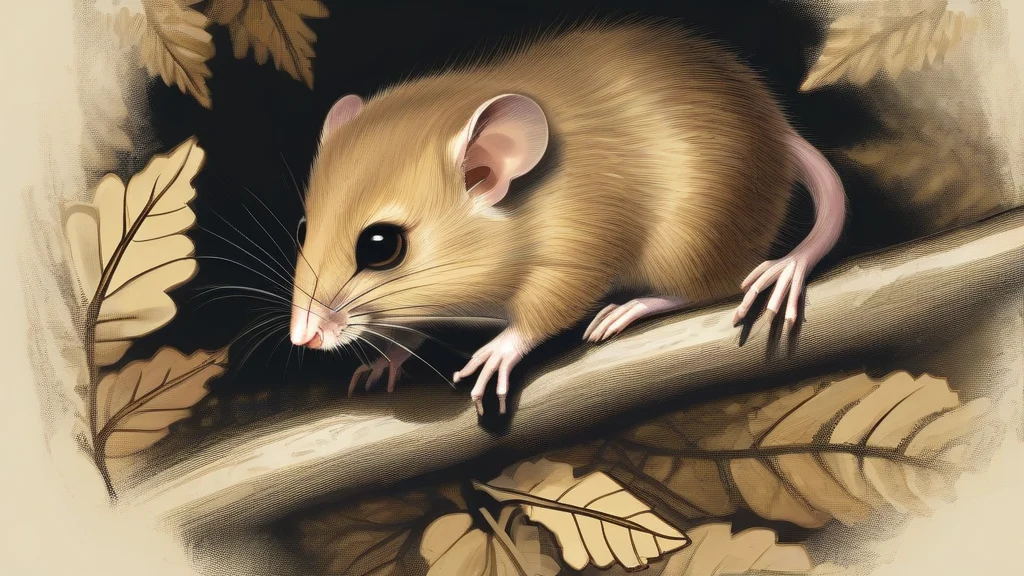
A dormouse is a small, mostly nocturnal rodent belonging to the family Gliridae, native to Europe, Asia, and parts of Africa. The best-known British species, the hazel dormouse (Muscardinus avellanarius), is a shy, golden-brown creature that lives in woodlands and hedgerows and is famous for sleeping deeply — hibernating for much of the year and even entering summer torpor when food is scarce. Because of habitat loss, the dormouse has become an emblematic figure in British conservation, frequently cited in campaigns to preserve ancient woodland. The word also carries a literary glow: Lewis Carroll's sleepy Dormouse at the Mad Hatter's tea party has made 'dormouse' a byword for drowsiness, and calling someone a dormouse is an affectionate way to describe a habitual sleeper. With its memorable plural 'dormice' and rich natural-history associations, the word is both precise and evocative, useful in scientific writing and charming in everyday metaphor.
nounA small, nocturnal rodent of the family Gliridae, noted for its long hibernation and bushy tail; the best-known species in Britain is the hazel dormouse (Muscardinus avellanarius).
- A small nocturnal rodent of the family Gliridae, especially the hazel dormouse (Muscardinus avellanarius) of Europe, known for its arboreal habits and exceptionally long hibernation.
- (Figurative or literary) A notably sleepy person, by allusion to the animal's torpor and to Lewis Carroll's drowsy character.
"The dormouse sleeps for months at a time, curled beneath the hedgerow."
"Conservationists are restoring hedgerows to protect the declining dormouse population."
"He was so drowsy after lunch that he sat through the meeting like a dormouse at a tea party."
The plural follows the Latin-style pattern seen in 'mouse/mice'; 'dormouses' is nonstandard.
"Dormice were once common across southern England but have declined sharply."
A dormouse can spend up to three-quarters of its life asleep — it famously dozed its way through the Mad Hatter's tea party.
Reviewed by Deb Chak, Editor. AI-assisted content curated by RJS Tech Solutions LLP.
Etymology of dormouse
'Dormouse' entered English in the early 17th century, borrowed from Anglo-Norman or Old French 'dormeuse', from 'dormir' ('to sleep'), ultimately from Latin 'dormire'. The name thus literally suggests a 'sleepy one', reflecting the animal's celebrated hibernation. It shares this Latin root with English words such as 'dormant' and 'dormition'.
How dormouse is actually used
The word is most often encountered in British nature writing and conservation contexts; the plural 'dormice' is standard. Figurative use for a sleepy person is informal and usually alludes to Lewis Carroll's Alice's Adventures in Wonderland.
Easily confused with dormouse
A mouse is any of many common rodents of the family Muridae found worldwide, whereas a dormouse is a distinct, largely European rodent of the family Gliridae famed for its prolonged hibernation.