
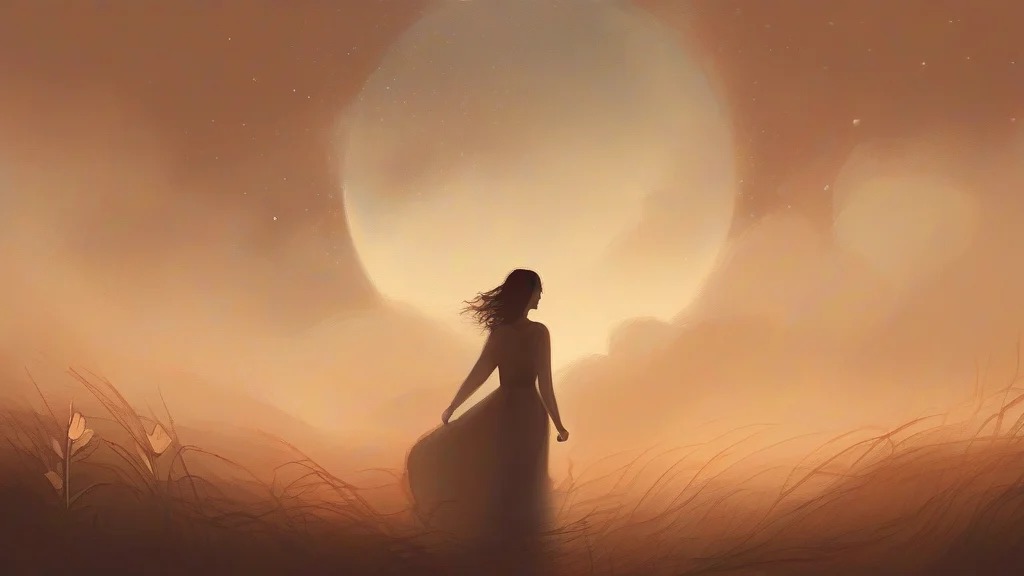
What does dreamier mean?
"Dreamier" is the comparative form of the adjective "dreamy" and describes something that possesses more of a dream's qualities: haziness, softness, romance, or detachment from ordinary reality. A scene can be dreamier when it feels misted, gentle, and slightly unreal, while a person may be called dreamier when they seem lost in their own thoughts or when they strike others as attractively wistful and romantic. In everyday informal use, calling someone or something "dreamier" often signals fond admiration rather than criticism. The word derives from "dream," which traces back through Middle English to Old English "drēam," originally meaning joy or music before shifting to its modern sense of visions during sleep. Because it invites comparison, "dreamier" typically appears in constructions such as "even dreamier" or "the dreamier of the two." It is a useful word for evoking atmosphere, mood, and character in descriptive writing.
adjectiveThe comparative form of the adjective "dreamy," meaning more dreamlike, hazy, or given to daydreaming; or more attractive and romantic in an ethereal way.
- More dreamlike, hazy, or vague in quality or atmosphere.
- More inclined to daydreaming or absent-minded reverie.
- More romantic, beautiful, or charming in an ethereal, otherworldly way (informal).
"As the evening wore on, the music grew softer and the atmosphere ever dreamier."
"The coastal town grew even dreamier as the fog rolled in at dusk."
"He was always the dreamier of the two brothers, often caught staring out the window mid-lesson."
"Dreamier" is one of those rare comparatives that can describe both a person lost in thought and a sunset over the sea — two kinds of dreaming in a single word.
Reviewed by Deb Chak, Editor. AI-assisted content curated by RJS Tech Solutions LLP.
Etymology of dreamier
"Dreamier" is formed by adding the comparative suffix "-er" to "dreamy," an adjective built on the noun "dream." The noun "dream" comes from Middle English "dreem," descended from Old English "drēam," which originally denoted joy, merriment, or music before narrowing to mean visions experienced during sleep. The adjective "dreamy," and by extension its comparative "dreamier," developed later in English to evoke the hazy, unreal quality associated with dreams.
Related word forms
How dreamier is actually used
"Dreamier" is informal to neutral in register. Its figurative sense describing an attractive or romantic person is chiefly colloquial, especially common in casual speech and entertainment writing.
Easily confused with dreamier
"Dreamier" is the comparative form meaning more dreamy, while "dreamlike" simply describes something resembling a dream without any comparison.