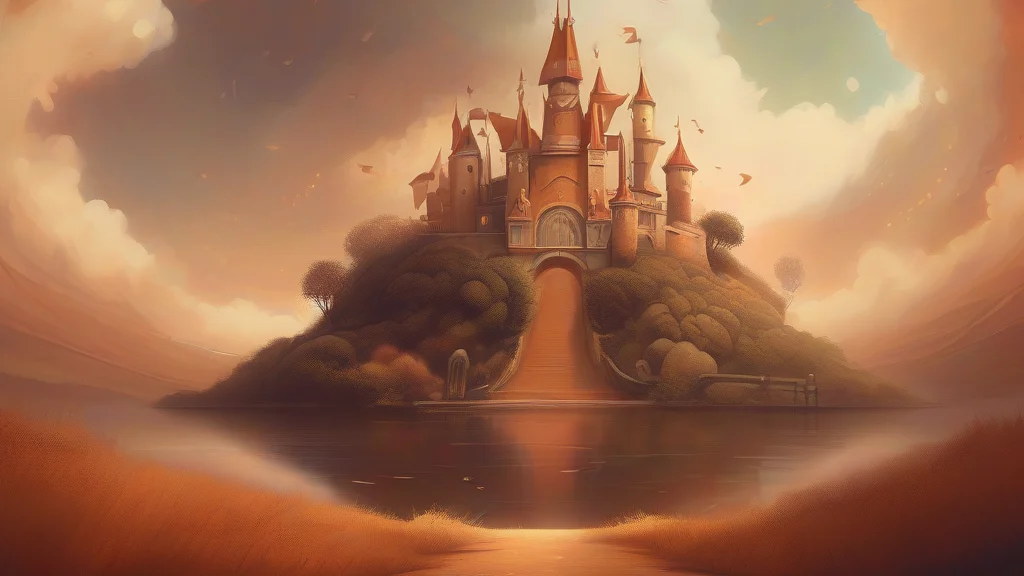
What does dreamworld mean?
A dreamworld is a world of fantasy — an idealized, imagined realm that exists only in the mind, or a mental state in which someone drifts away from reality into pleasant illusions. The word combines 'dream' with 'world', and it works both literally and figuratively: a novelist may construct an entire dreamworld for her characters, while a person who ignores inconvenient facts may be accused of living in one. That second use gives the term its most common modern flavor, carrying a gently critical edge that suggests naivety, wishful thinking, or denial. In more neutral or positive contexts, however, a dreamworld can simply denote enchantment, escapism, or creative invention. Related terms such as dreamland and fairyland overlap in meaning, though they tend to evoke sleep and childhood wonder rather than detachment from reality. Versatile and evocative, dreamworld appears frequently in literature, psychology, and everyday speech.
A world of fantasy or illusion; an idealized realm imagined by the mind.
"The film transports viewers into a shimmering dreamworld where gravity obeys emotion."
Often used figuratively to criticize someone out of touch with reality.
A state of pleasant daydreaming or mental detachment from one's surroundings.
"Lost in a dreamworld, she missed her stop entirely."
Regular plural; used when contrasting several distinct imagined worlds, as in fiction or psychology.
"The exhibition explores the dreamworlds of five different surrealist painters."
The word 'dreamworld' was famously borrowed for Australia's Gold Coast theme park of the same name — proof that even our word for fantasy can become a real place you buy tickets to.
Reviewed by Deb Chak, Editor. AI-assisted content curated by RJS Tech Solutions LLP.
Etymology of dreamworld
Dreamworld is a straightforward English compound formed from 'dream', from Old English 'drēam' (originally meaning joy or music before shifting to mean a vision during sleep), and 'world', from Old English 'weorold'. The compound arose in English during the 19th century as writers sought terms for imagined realms and states of reverie. Its cognates are essentially the other derivatives of 'dream', such as dreamer, dreamy, and dreamlike, since the compound itself is native to English.
How dreamworld is actually used
Dreamworld carries a mildly negative or pitying connotation when used about people ('living in a dreamworld'), implying naivety or denial. In literary or descriptive contexts it can be neutral or positive, evoking enchantment and imagination. The compound is informal-to-neutral in register and common in both British and American English.
Easily confused with dreamworld
Dreamland most often refers to the imaginary realm of sleep or dreams, while dreamworld more often denotes a self-created fantasy that may be at odds with reality.