What does druid mean?
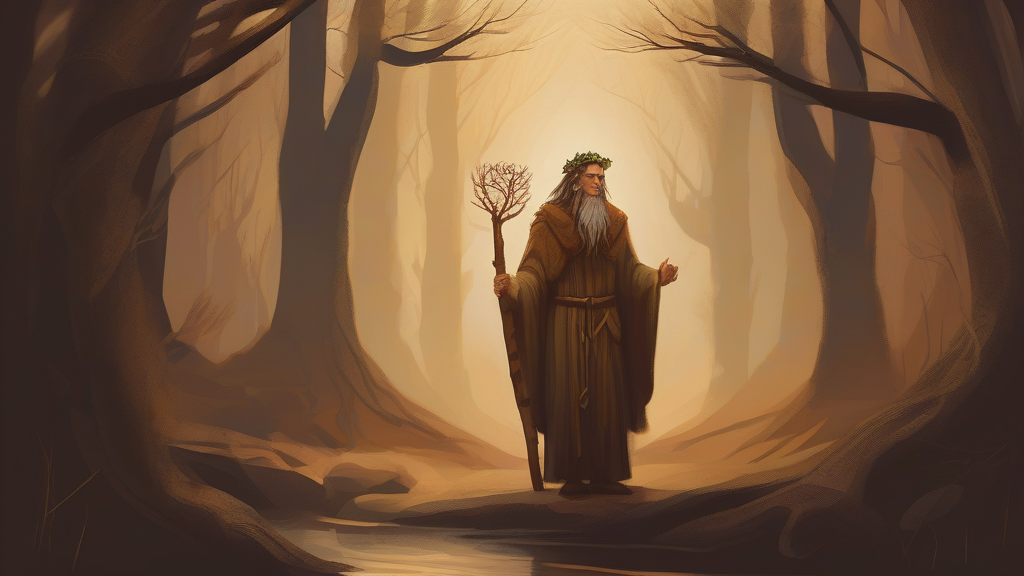
A druid was a member of the educated priestly class of the ancient Celts, serving across Britain, Ireland, and Gaul as religious leader, judge, teacher, and custodian of tribal memory. Because the druids deliberately avoided writing down their knowledge, transmitting it instead through years of memorized verse, almost everything known about them comes from outside observers such as Julius Caesar, whose accounts may reflect Roman bias. The word has since broadened beyond history: it is used figuratively for a sage, seer, or wise elder, and it thrives in fantasy literature, games, and modern Neo-Druidry as a symbol of wisdom, mysticism, and harmony with nature. Derived forms include 'druidic' and 'druidism', which describe the beliefs, practices, or style associated with druids.
A member of the priestly class in ancient Celtic societies, responsible for religious ceremonies, legal judgments, and the preservation of oral tradition.
"The druids trained for up to twenty years, committing vast bodies of lore to memory rather than writing anything down."
Frequently capitalized when used as a title or in reference to the historical order.
Figuratively, a person considered a sage, prophet, or keeper of hidden wisdom, often associated with nature or mysticism.
"Locals regarded the old herbalist as a kind of druid who understood the forest's secrets."
Regular plural; commonly used collectively ('the druids') when referring to the class as a whole.
"The Romans launched campaigns against the druids, destroying their sacred sites on Anglesey."
The druids wrote nothing down — everything we know about them comes from the Romans who feared and fought them, so their entire world survives only through their enemies' eyes.
Reviewed by Deb Chak, Editor. AI-assisted content curated by RJS Tech Solutions LLP.
Etymology of druid
'Druid' entered English in the mid-16th century from French 'druide' and Latin 'druides', which borrowed it from a Gaulish term recorded as 'druides'. The Celtic root is widely connected to the Indo-European base *deru- meaning tree or oak, suggesting an association with oak trees and possibly with strength or firmness. It shares this ancient root with Greek 'dryas', meaning wood-nymph or oak-spirit, which gives English its cognate 'dryad'.
Related word forms
How druid is actually used
In modern usage, 'druid' most often refers to the historical Celtic priesthood, but it is also used figuratively for any wise, mystical, or nature-connected figure. In fantasy fiction and modern pagan movements such as Neo-Druidry, it carries connotations of nature worship and magic. The word can be capitalized when referring to the historical class specifically.
Easily confused with druid
A dryad is a nymph or tree spirit in Greek mythology, whereas a druid was a Celtic priest or sage.