
What does echinated mean?
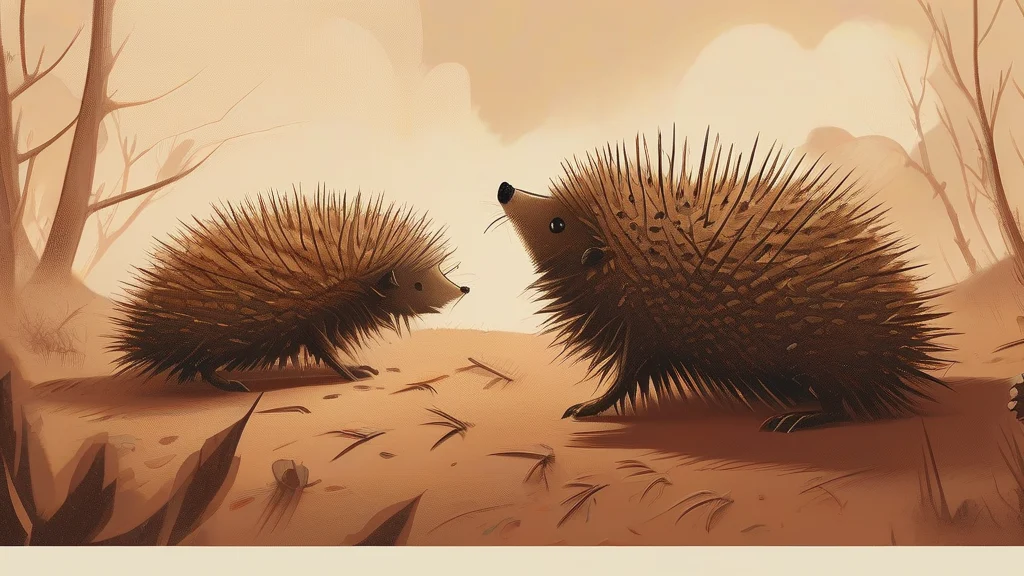
Echinated is an adjective describing something bristling with stiff spines or prickles, much like the back of a hedgehog. It derives from Latin echinus, meaning hedgehog or sea urchin, which itself comes from the Greek ekhinos. The word appears almost exclusively in scientific writing, particularly botany, where it describes fruits, seeds, or other plant parts armed with sharp, rigid projections, and in palynology, where it characterises pollen grains ornamented with short spines. To say a surface is echinated is more precise than calling it simply prickly or thorny: it implies dense, uniform, hedgehog-like armature rather than scattered thorns or soft hairs. Related terms include echinate, an equivalent adjective, and echinoderm, the name of the animal phylum that includes starfish and sea urchins, all of which trace back to the same Greek root. For readers encountering unfamiliar flora or fauna described as echinated, the image is simple and vivid: a living pincushion, thoroughly defended by its own spines.
adjectiveBristling with prickles or spines; covered with stiff, hedgehog-like projections.
- (Of a plant part or surface) covered with or bearing stiff spines or prickles; bristling like a hedgehog.
"The echinated husks of the chestnuts carpeted the forest floor in autumn."
"Botanists noted that the fruit was densely echinated, each spine tipped with tiny barbs."
"Under the microscope, the pollen grain appeared distinctly echinated, bristling with short blunt spines."
Echinated literally means 'hedgehog-like' — the word comes straight from the Greek for hedgehog, making it the perfect description for anything nature has turned into a pincushion.
Reviewed by Deb Chak, Editor. AI-assisted content curated by RJS Tech Solutions LLP.
Etymology of echinated
Echinated comes from the Latin echinus, meaning hedgehog or sea urchin, borrowed in turn from the ancient Greek ekhinos of the same meaning. The suffix -ate combined with the past-participle ending produced an English adjective describing things covered with hedgehog-like spines. The same Greek root gives us echinoderm ('spiny-skinned'), the name for starfish and sea urchins. The word entered scientific English around the early modern period as naturalists sought precise terms for spiny structures.
Related word forms
How echinated is actually used
A technical term used chiefly in botany, zoology, and palynology (the study of pollen). It is rare in general prose and carries a formal, scientific register.
Easily confused with echinated
Despite a similar ending, incarnate means embodied in flesh and shares no connection with echinated's sense of being covered in spines.