What does elk mean?
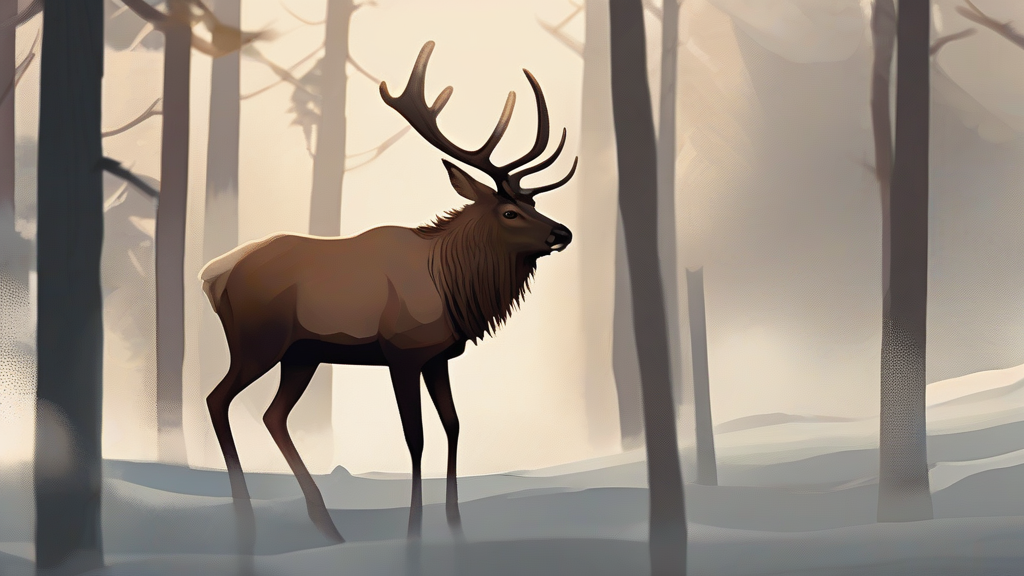
Elk is a noun denoting one of the largest members of the deer family, though which animal it names depends on where you are. In North America, the elk is the wapiti (Cervus canadensis), a imposing reddish-brown deer with sweeping, branching antlers, found across mountainous and forested regions of the western United States and Canada. In Britain and most of Eurasia, however, the same word refers to what Americans call the moose (Alces alces), the largest living deer, distinguished by its long legs, pendulous nose, and broad palmate antlers. This transatlantic split makes elk a classic example of regional variation in animal names. The word is used both for individual animals and collectively ('a herd of elk'), and its plural is usually unchanged. Beyond natural-history writing, elk appears often in discussions of wildlife conservation, hunting, and national parks, and it carries connotations of wilderness, grandeur, and the rugged landscapes of the north.
nounA large deer native to northern regions. In North America, 'elk' refers to the wapiti (Cervus canadensis), a large red-deer-like animal with branching antlers; in Britain and much of Eurasia, 'elk' refers to what North Americans call the moose (Alces alces).
- In North America: the wapiti (Cervus canadensis), a large deer with branching antlers found in western mountains and woodlands.
- In British and European usage: the moose (Alces alces), the largest living deer species, called 'elk' throughout Eurasia.
"We watched a bull elk bugle across the misty meadow at dawn."
"Each autumn, the bugling of bull elk echoes through the valleys of Yellowstone."
"The hunter tracked a solitary elk through the birch forests of Scandinavia."
When referring to animals collectively, the plural is normally unchanged, as in 'a herd of elk'; 'elks' appears chiefly when counting individuals.
"Several elk were spotted crossing the river at dusk."
The same word 'elk' names two different giant deer on two different continents — ask for an elk in Colorado and in Stockholm, and you'll meet entirely different animals.
Reviewed by Deb Chak, Editor. AI-assisted content curated by RJS Tech Solutions LLP.
Etymology of elk
The word elk comes from Old English eolh, deriving ultimately from Proto-Germanic roots shared by German Elch and the Scandinavian words for the moose. It was applied in North America by early European settlers to the wapiti, likely because the animal's size reminded them of the great deer they knew at home as the elk. Its ultimate origins may lie in a pre-Germanic source also reflected in Latin alces, though this connection is not certain.
How elk is actually used
The word's meaning depends heavily on region: Americans use 'elk' for the wapiti and reserve 'moose' for Alces alces, while British and continental European speakers use 'elk' for the moose. The plural is typically unchanged ('a herd of elk'), though 'elks' is also acceptable.
Easily confused with elk
In North American usage, the moose and the elk are different animals — the moose (Alces alces) has broad palmate antlers and a drooping nose, while the North American elk or wapiti resembles a large red deer — though in British and European usage the word 'elk' actually names the moose itself.