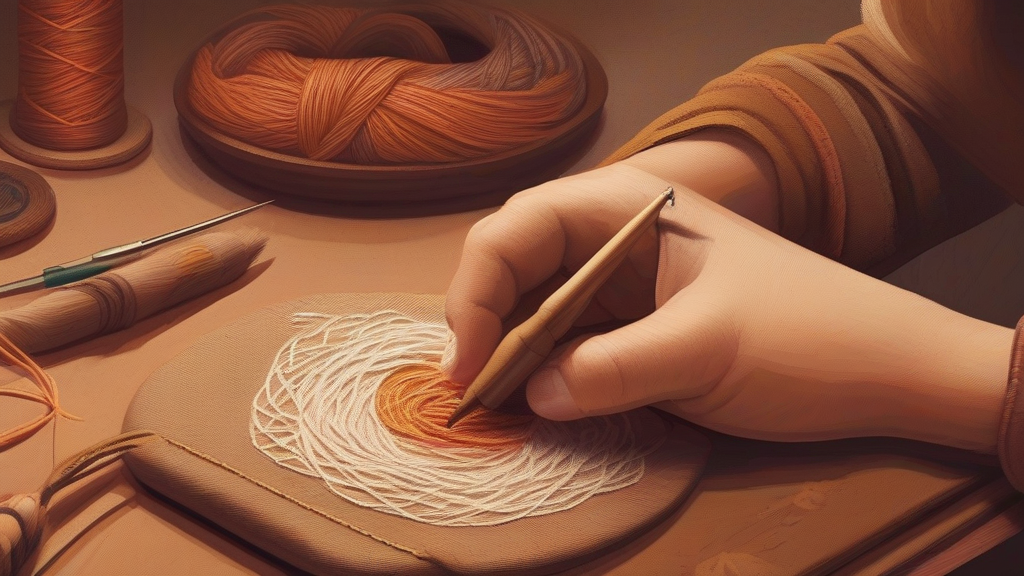
What does embroiderer mean?
An embroiderer is a person who decorates fabric using needle and thread, creating ornamental designs through techniques such as satin stitch, chain stitch, and couching. The word is formed by adding the agentive suffix "-er" to the verb "embroider," and it describes practitioners at every level, from home hobbyists embellishing household linens to professional artisans producing work for fashion houses, ecclesiastical vestments, or museums. Embroidery is among the oldest decorative crafts known, practiced across virtually every culture, and embroiderers have historically held significant roles — from medieval workshops that produced monumental pieces like the Bayeux Tapestry to contemporary couture ateliers. The noun carries no particular connotation of formality or informality and pairs readily with adjectives such as "skilled," "master," or "accomplished." Related forms include "embroidery" (the craft itself) and "embroidered" (describing decorated fabric).
nounA person who decorates fabric with needlework, stitching patterns or designs onto cloth using thread.
- A person who practices embroidery as a craft or profession, decorating fabric with needle and thread.
"The skilled embroiderer spent months stitching the intricate design onto the bridal gown."
"Her grandmother was a celebrated embroiderer whose work adorned church vestments across the county."
"The museum commissioned a master embroiderer to restore the damaged Elizabethan panel."
Regular plural formation. Often used collectively when referring to guilds, workshops, or groups of practitioners.
"Medieval embroiderers often worked in workshops under the direction of a master."
The Bayeux Tapestry — actually an embroidered cloth, not a tapestry — was likely stitched by teams of medieval embroiderers whose names history never recorded, yet their work has outlasted empires.
Reviewed by Deb Chak, Editor. AI-assisted content curated by RJS Tech Solutions LLP.
Etymology of embroiderer
"Embroiderer" derives from the verb "embroider," which entered Middle English from Anglo-Norman and Old French "embrouder" (or "embroder"), itself built on the prefix "em-" plus "brouder," related to the idea of working or bordering with thread. The ultimate Germanic root also gave rise to the English word "broider." The agentive suffix "-er" was added in English to denote one who performs the craft, making "embroiderer" a straightforward English formation on a borrowed verb.
Related word forms
How embroiderer is actually used
A neutral, everyday noun with no strong register. It applies equally to hobbyists and professionals; for highly accomplished practitioners, terms like "master embroiderer" signal expertise. The word is agentive, formed from "embroider" with the suffix "-er."
Easily confused with embroiderer
"Embroiderer" is the person who does the needlework, while "embroidery" is the decorative work itself.
An "embroiler" would be someone who embroils others in conflict, whereas an embroiderer works decorative stitches into fabric — the words share a look but nothing else.