What does entrenchment mean?
Entrenchment refers to the process or state of something being established so deeply and securely that it resists removal or alteration. Though it originated in military language — describing trenches dug into the ground for defense — its dominant modern use is figurative, especially in politics, law, and institutional life. One speaks of the entrenchment of rights in a constitution, the entrenchment of an incumbent party's power, or the entrenchment of habits and attitudes within an organization. Because entrenched things are hard to dislodge, the word often carries a critical connotation, suggesting rigidity, complacency, or resistance to reform, though it can be neutral or even positive when describing protected rights. The literal military sense survives chiefly in historical writing about siege warfare and battlefield fortifications. For writers seeking a precise way to describe deep-rooted stability — whether admirable or obstructive — entrenchment remains an indispensable term.
nounThe action or fact of establishing something so firmly that it is very difficult to change; also, a system of defensive ditches and earthworks dug by soldiers.
- The firm establishment of an attitude, practice, institution, or right so that it becomes very difficult to change or remove.
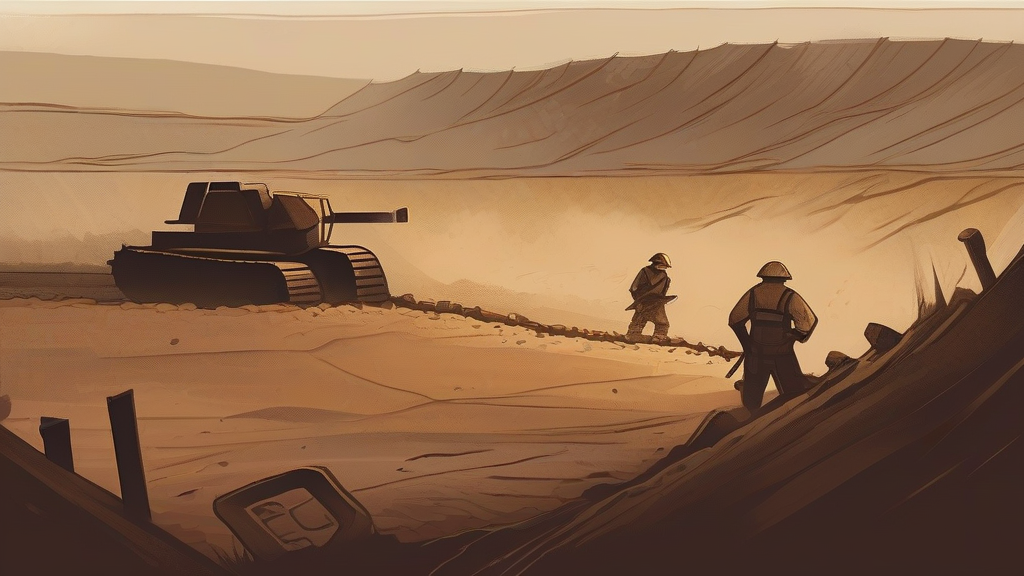
- A trench or system of trenches dug as a defensive military position; fortifications consisting of excavated earthworks.
"The entrenchment of outdated practices made reform nearly impossible."
"Critics warned that the entrenchment of the new law would make future amendments extremely difficult."
"The soldiers spent the night digging entrenchments along the ridge to protect their position."
Countable in the military sense (individual trenches or fortified positions); usually uncountable in the figurative sense of firm establishment.
"The army's entrenchments stretched for miles along the riverbank."
The word 'entrenchment' literally began as digging trenches — before soldiers dug in, politicians did.
Reviewed by Deb Chak, Editor. AI-assisted content curated by RJS Tech Solutions LLP.
Etymology of entrenchment
Entrenchment derives from the verb entrench, formed from the prefix en- (from French) plus trench, which comes from Old French trenche, a noun from trenchier meaning 'to cut'. The underlying root traces back to the Latin truncare, 'to cut off or lop', which also gives English truncate and trenchant. The word entered English around the late sixteenth or early seventeenth century, first in the literal military sense of defensive earthworks, before developing its figurative sense of firm establishment.
Related word forms
How entrenchment is actually used
Predominantly formal or technical in register. In political and legal writing it often carries a mildly negative connotation, implying resistance to change or self-protection by those in power. The military sense is largely historical, appearing mainly in accounts of pre-20th-century warfare.
Easily confused with entrenchment
Entrenchment means something becoming firmly fixed in place, while encroachment means a gradual intrusion onto someone else's rights or territory.