What does ettin mean?
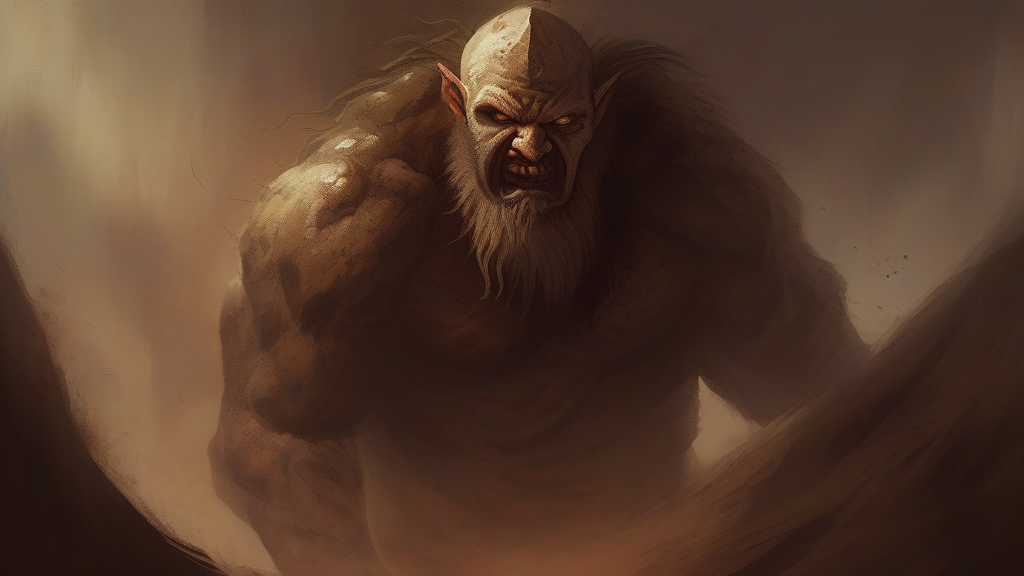
An ettin is a two-headed giant drawn from English and Scottish folklore, best known today as a staple monster of fantasy role-playing games such as Dungeons & Dragons, where it is portrayed as a hulking, brutish creature whose two heads often bicker with each other. The word is far older than its modern gaming fame: it descends from the Old English "ēoten," meaning simply a giant or monster, making it a direct sibling of the Old Norse "jötunn," the word for the race of giants who opposed the gods in Norse mythology. Because of this lineage, "ettin" carries a distinctly archaic flavor when used outside fantasy contexts, and writers sometimes invoke it deliberately to lend an old-English or mythic tone to their prose.
A two-headed giant in English and Scottish folklore, and in modern fantasy games a brutish monster of that description.
"The party defeated the ettin after a long, bruising battle."
Primarily used in fantasy fiction, role-playing games, and discussions of folklore.
(Archaic) A giant or monster; the broader original sense of the Old English word.
"Old English verse is full of eotenas, giants slain by legendary heroes."
This sense survives chiefly in literary and etymological discussion; the plural form here follows the older declension.
The standard modern plural adds -s. In Old English the plural was "eotenas."
"Legends tell of ettins that terrorized the borderlands."
The word "ettin" is a living fossil: it's the same ancient Germanic word for giant that gave Norse mythology its fearsome jötnar — the race of Thor's sworn enemies.
Reviewed by Deb Chak, Editor. AI-assisted content curated by RJS Tech Solutions LLP.
Etymology of ettin
The word "ettin" derives from Middle English "eoten" (also "eten"), which came from the Old English "ēoten," meaning a giant or monstrous being. It is cognate with the Old Norse "jötunn," the name for the giants of Norse mythology, both stemming from a common Proto-Germanic root. In Scots dialect the form "ettin" survived into the modern era, preserving the archaic sense of a giant, before fantasy gaming revived it in its now-familiar two-headed-giant guise.
Related word forms
How ettin is actually used
In contemporary usage, "ettin" is almost exclusively encountered in fantasy fiction, tabletop role-playing games, and video games, where it denotes a specific monster type. Outside those contexts it appears mainly in discussions of folklore and etymology.
Easily confused with ettin
"Eating" is the present participle of the verb "eat" (consuming food), while an "ettin" is a two-headed giant of folklore.