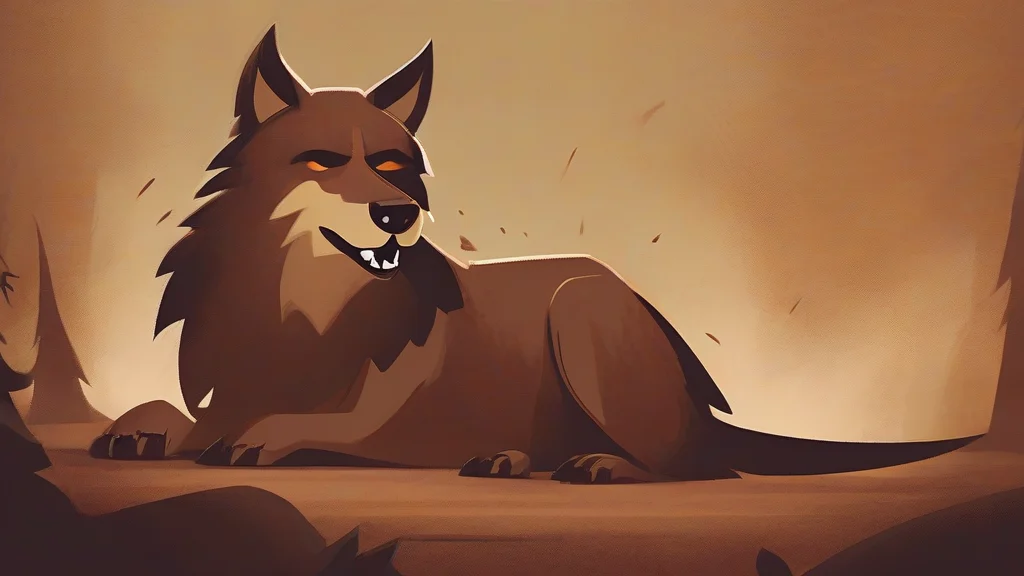
What does fang mean?
A fang is a long, sharply pointed tooth, most characteristically the piercing canine of a predator such as a wolf, dog, or big cat, or the specialized venom-delivering tooth of a snake. In snakes, fangs may be grooved or hollow and function like hypodermic needles, injecting venom into prey. Beyond zoology, the word carries strong figurative weight: to 'show' or 'bare' one's fangs is to reveal aggression previously hidden behind a friendly manner, making the word a vivid staple of political and journalistic prose. Historically, fang was also used for the root of a tooth and, in archaic usage, as a verb meaning to seize or capture — reflecting its origins in a Germanic root associated with catching and taking hold. Today it appears chiefly in nature writing, fiction, and metaphor, evoking danger and predatory power more than anatomy alone.
A long, sharply pointed tooth, especially the canine tooth of a predatory mammal or the venomous tooth of a snake.
"The hound's fangs gleamed as it snarled through the fence."
Applied especially to dogs, wolves, big cats, and snakes; figurative uses describe revealed aggression.
(Archaic) To grasp or seize; to capture.
"The hawk fanged the fish from the shallow stream."
This sense is obsolete in modern usage and appears mainly in historical texts.
Standard plural; animals almost always have two or more fangs, so the plural form is very common in natural usage.
"The spider's fangs were visible even without a magnifying glass."
A viper's fangs fold backward against the roof of its mouth when closed, springing into position only at the moment it strikes.
Reviewed by Deb Chak, Editor. AI-assisted content curated by RJS Tech Solutions LLP.
Etymology of fang
The word fang traces back to Old English 'fang', which originally meant seizure, capture, or plunder — the act of grasping rather than the tooth itself. It derives from a Germanic root shared with verbs meaning 'to catch', and is cognate with German 'fangen' (to catch) and Dutch 'vangen'. During the Middle English period the meaning shifted toward the modern sense of a long pointed tooth, likely influenced by Scandinavian forms. This dual heritage explains why 'fang' can still feel like both an anatomical term and a word about taking hold of something.
Related word forms
How fang is actually used
Most commonly used of animals, especially predators; figurative use describing human aggression ('showing its fangs') is well established in journalism and political commentary. The archaic verbal sense survives mainly in older literature.
Easily confused with fang
A fan is an admirer or a device for moving air, while a fang is a long pointed tooth.