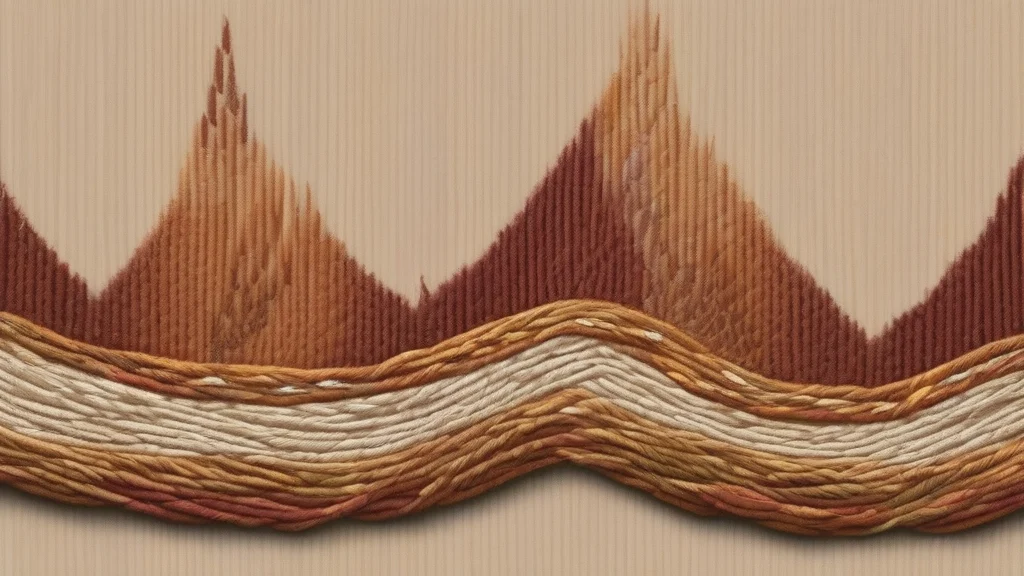
What does featherstitch mean?
Featherstitch is an ornamental embroidery stitch whose slanting, alternating threads create an open, branching line said to resemble the barbs of a feather — hence the name. Worked along a hem or seam, it is both decorative and functional, often finishing raw edges on linens, quilts, and especially children's and baby garments. The word can also function as a verb meaning to apply this stitch to fabric. Featherstitch was a mainstay of Victorian and Edwardian fancywork and remains beloved in heirloom sewing circles, where it lends a soft, vintage charm to christening gowns, tea towels, and pillowcases. Related variants include the double featherstitch, which produces a wider, more elaborate spray. For anyone interested in needlecraft, featherstitch is a foundational decorative technique: simple to learn, endlessly versatile, and instantly recognizable by its feathery zigzag silhouette.
A decorative embroidery stitch consisting of alternating slanting stitches worked on either side of a central line, producing a zigzag pattern suggestive of a feather.
"Rows of featherstitch adorned the edges of the linen pillowcases."
Often used attributively in craft contexts, e.g. 'a featherstitch hem'.
To decorate fabric with featherstitch.
"She learned to featherstitch as a girl, edging hankies and doll clothes."
Used when referring to multiple instances or rows of the stitch, though craft writing more often speaks of 'rows of featherstitch' than of counting plural stitches.
"The sampler displayed several different featherstitches worked in colored silks."
Its name comes from its look: each zigzag branch resembles the barb of a feather — no actual feathers required.
Reviewed by Deb Chak, Editor. AI-assisted content curated by RJS Tech Solutions LLP.
Etymology of featherstitch
The word featherstitch is a transparent English compound, combining 'feather' (from Old English 'fether') with 'stitch' (from Old English 'stice', related to 'stick'), and arose from the stitch's resemblance to a feather's branching structure. It emerged in the context of domestic needlework during the nineteenth-century enthusiasm for decorative embroidery. Its cognates are not foreign borrowings but sibling terms from the same craft vocabulary, such as blanket stitch and herringbone stitch, which likewise name stitches after the patterns they produce.
How featherstitch is actually used
Primarily associated with needlework and sewing contexts; used by crafters, seamstresses, and embroiderers rather than in everyday conversation. The verb form is less common than the noun. Historically popular in Victorian-era fancywork and still found in heirloom sewing, especially on baby clothes and linens.
Easily confused with featherstitch
Herringbone stitch is worked as interlocking slanted stitches forming a band between two parallel lines, whereas featherstitch alternates stitches on either side of a single central line, giving a feathery, open appearance.