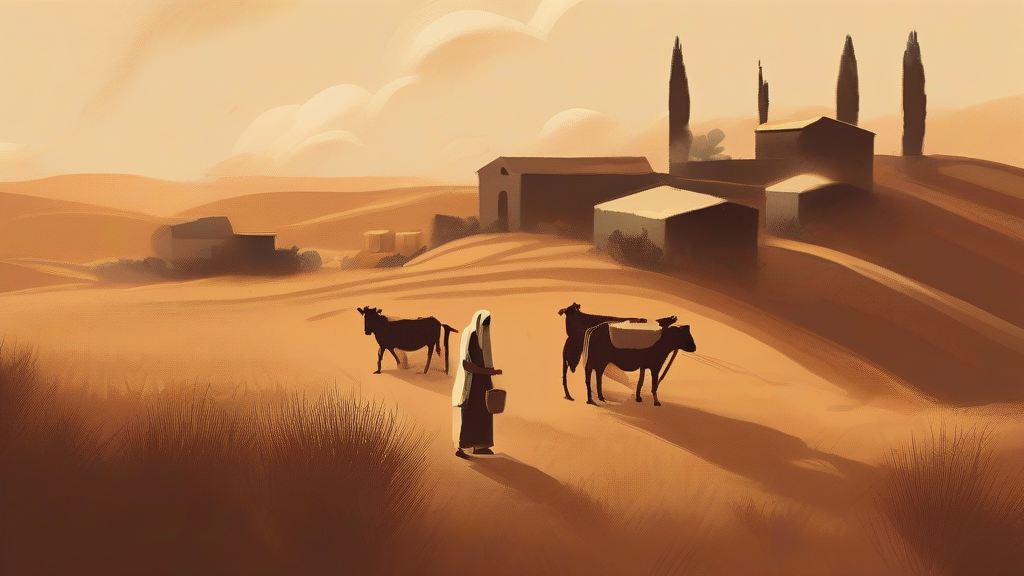
What does fellahin mean?
Fellahin (singular: fellah) is a noun used to describe Arab farmers or peasant agricultural laborers, particularly those working the land in Egypt and other parts of the Middle East. Borrowed directly from Arabic into English during the period of European travel and colonial engagement with the region, the word became especially associated with the rural cultivators of the Nile Valley, whose way of life was frequently described by nineteenth-century writers as having remained largely unchanged since ancient times. In modern usage, fellahin appears mainly in historical, anthropological, or journalistic contexts rather than everyday conversation. The term can carry connotations of rustic simplicity or economic hardship, reflecting the social position of smallholder farmers and field laborers it denotes. Alternative spellings such as fellaheen appear in older texts, but fellahin is now the more standard form in English-language writing about the region.
nounFellahin is the plural of fellah, referring to Arab farmers, peasants, or agricultural laborers, especially those in Egypt and the Middle East who till the land.
- Arab farmers or peasants, especially in Egypt, who work the land as agricultural laborers.
"The fellahin worked the floodplain of the Nile much as their ancestors had for millennia."
"The fellahin rose before dawn to irrig their fields along the Nile."
"Travel writers of the nineteenth century often depicted the fellahin as living almost unchanged since pharaonic times."
Fellahin is itself already a plural form (the plural of fellah). It does not take a further English -s plural. When referring to a single farmer, use fellah.
"A single fellah guided his oxen through the field, while the other fellahin worked nearby."
The fellahin have farmed the banks of the Nile for thousands of years — the very word comes straight from Arabic and entered English through travelers' accounts of Egypt.
Reviewed by Deb Chak, Editor. AI-assisted content curated by RJS Tech Solutions LLP.
Etymology of fellahin
Fellahin derives from the Arabic word fallāḥ (فَلَّاح), meaning 'farmer' or 'tiller of the soil', with fellahin being its Arabic plural form. The root relates to cultivation of the earth, and the term passed into European languages through travelers' accounts of the Ottoman Arab world, becoming established in English by the eighteenth or nineteenth century. A closely related variant transliteration, fellaheen, appears in earlier English texts. The word shares its Semitic root with related Arabic terms connected to agriculture.
Related word forms
How fellahin is actually used
Fellahin is a plural form borrowed from Arabic and typically functions as a plural noun in English, though it is sometimes treated as a collective. It is a somewhat formal or literary term, most often encountered in historical, ethnographic, or journalistic writing about rural Egypt or the Levant. The singular is fellah. Because it refers to a specific class of rural laborers, it can carry connotations of poverty or low social status depending on context.
Easily confused with fellahin
Fellaheen is an alternative (older) transliteration of the same word, whereas 'fellahin' is the more common modern spelling.
Fell is an English verb meaning to cut down or knock over; it has nothing to do with the Arabic-derived noun fellahin despite superficial spelling similarity.