What does feria mean?
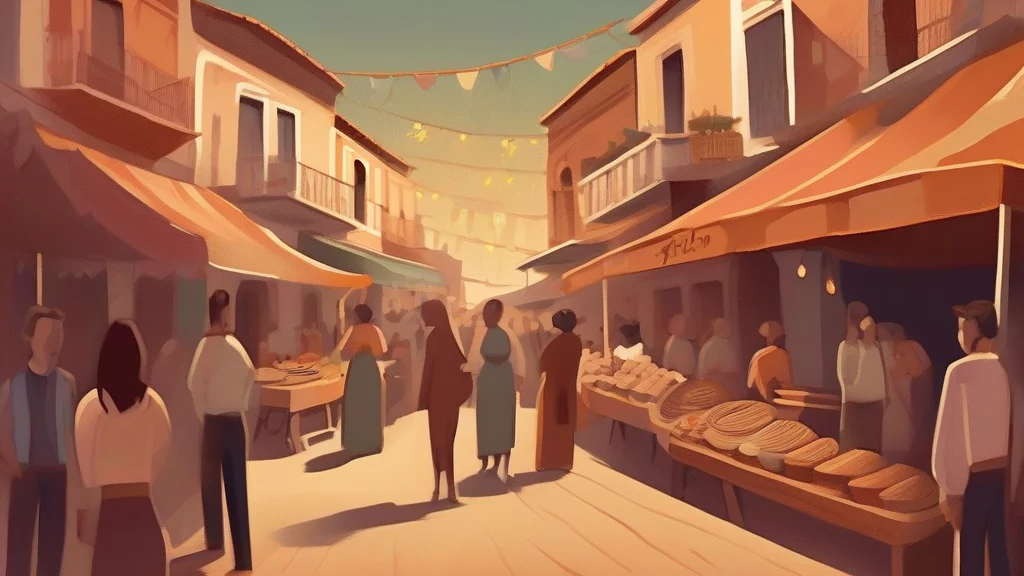
Feria is a noun with two distinct strands of meaning. In its original English and ecclesiastical use, a feria is an ordinary weekday — a day in the church calendar on which no saint's feast or other festival falls, so that only the regular daily office is observed; expressions such as 'feria of Lent' appear in Catholic and Anglican liturgical practice. Its second sense, borrowed more directly from modern Spanish and Portuguese usage, denotes a fair or festival: the vibrant local celebrations of southern Spain and Latin America, complete with market stalls, music, dancing, and amusement rides, such as Seville's famous April Feria. Both senses descend from the same source, Latin feria, meaning 'holiday' or 'rest day' — a term that also gave rise to 'ferial' and, via Vulgar Latin, to words like 'fiesta'. The word's dual character is strikingly ironic: it names both days of festivity and days deliberately marked by their lack of one, making it a small linguistic window onto how sacred rest and public celebration have intertwined throughout history.
nounIn ordinary English use, a feria is a weekday on which no religious festival falls, especially in church calendars. In Spanish and Portuguese, and in English descriptions of those cultures, a feria is a fair or festival, particularly a local celebration with markets, rides, and entertainment.
- A weekday on which no feast or religious festival falls in the church calendar (ecclesiastical use).
- A fair or festival, especially a local one in Spain or Latin America, featuring markets, entertainment, and celebrations.
"The cathedral calendar marked Thursday as a simple feria, with no feast to be observed."
"In Lent, most weekdays are kept as ferias of the season rather than saints' days."
"Thousands crowded into the fairground as the city's annual feria opened at midnight."
The standard English plural is 'ferias'; the Latin plural 'feriae' occasionally appears when referring specifically to ancient Roman holidays.
"During the ferias of Lent, the liturgy follows the ordinary weekday pattern."
The same word that names Seville's exuberant spring fair also means a day of nothing special at all — an empty slot on the church calendar.
Reviewed by Deb Chak, Editor. AI-assisted content curated by RJS Tech Solutions LLP.
Etymology of feria
Feria derives from Latin feria, meaning 'holiday' or 'day of rest', which itself came from the adjective ferus meaning 'not working' and relates to the noun feriae, the festivals or holidays of the Roman calendar. The word passed through Ecclesiastical Latin, where feria came to denote any weekday other than Sunday, since every day was in some sense a holy day; this usage entered English in the medieval period and survives in liturgical contexts. Meanwhile the Romance languages developed the older festive sense: Spanish and Portuguese feria mean 'fair' or 'market festival', and Spanish fiesta descends from the same Latin root.
Related word forms
How feria is actually used
In liturgical and ecclesiastical English, 'feria' retains its technical meaning of an ordinary weekday free of feasts, with terms like 'feria of Lent' common in Roman Catholic and Anglican usage; the plural is usually 'ferias', though the Latin plural 'feriae' survives in reference to ancient Roman festivals. In Spanish-speaking contexts the word denotes a lively fair or festival and is often capitalized for named events. The ecclesiastical sense is formal and specialized, unfamiliar to many general readers.
Easily confused with feria
A fiesta is a festive celebration or religious feast day, while a feria can mean either such a fair (in Spanish contexts) or, in ecclesiastical English, precisely the opposite — an ordinary weekday without a festival.