What does fieldmice mean?
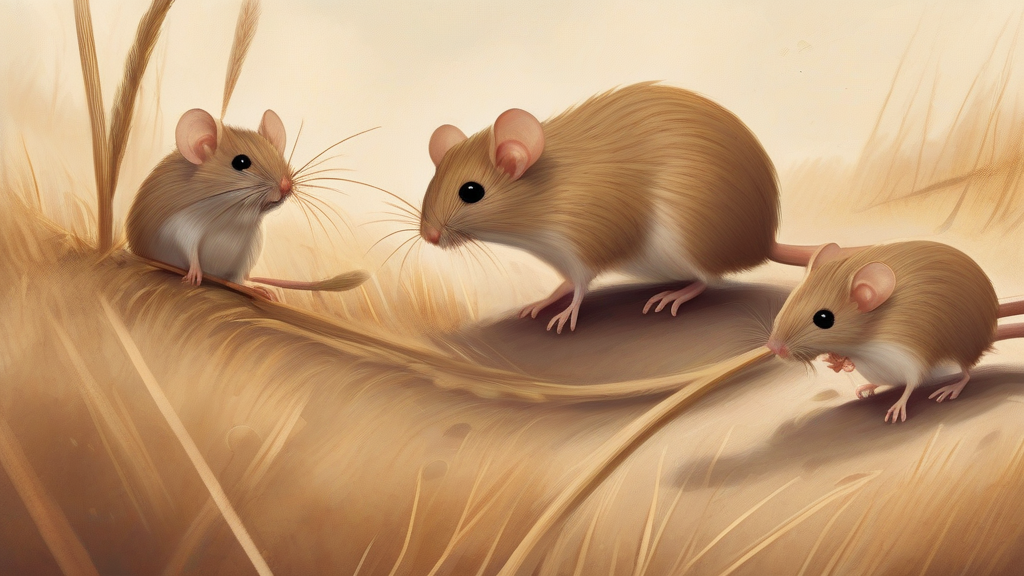
Fieldmice is the plural form of fieldmouse, a general term for small wild mice that live in open countryside — fields, meadows, hedgerows, and woodland edges. In British English it most often refers to the wood mouse (Apodemus sylvaticus), though Americans may apply it loosely to deer mice and similar species. The word carries rustic, pastoral connotations: fieldmice appear frequently in nature writing, children's literature, and country lore, evoking quiet hedgerows and harvested stubble rather than domestic infestation — an important contrast with 'house mice'. Because they are a staple prey for owls, foxes, and snakes, fieldmice are ecologically significant as a foundation of many food chains. The term is informal and imprecise by design; naturalists distinguish among particular species, while everyday speech groups them together under this familiar compound.
nounFieldmice is the plural of field mouse: small wild mice of various species, especially the wood mouse, that live in fields, hedgerows, and grassland.
- Small wild mice that inhabit fields, hedgerows, and grassland, especially the Eurasian wood mouse (Apodemus sylvaticus).
"The harvested stubble revealed a colony of fieldmice scurrying for cover."
"Hawks circled above the meadow, hunting the fieldmice that rustled through the dry grass."
"In winter, fieldmice often shelter in barns and outbuildings to escape the cold."
This is already the plural; the singular is 'fieldmouse' or 'field mouse'. The closed spelling is common in British English, while 'field mice' (open) is also fully standard in both British and American usage.
"By autumn, fieldmice had gathered seeds throughout the hedgerow."
A single barn owl can hoover up more fieldmice in one breeding season than most people will ever see in a lifetime.
Reviewed by Deb Chak, Editor. AI-assisted content curated by RJS Tech Solutions LLP.
Etymology of fieldmice
The word combines 'field', from Old English 'feld' meaning open land, with 'mouse', from Old English 'mus', which traces back through Proto-Germanic to the Indo-European root *mus-. This ancient root produced Latin 'mus' and Greek 'mys', giving English cognates such as 'murine' (relating to mice and rats), 'muscle' (from Latin musculus, literally 'little mouse'), and 'mussel'. The compound simply names the animal's habitat and has existed alongside other 'field-' compounds for centuries.
Related word forms
How fieldmice is actually used
Fieldmice is used only as the plural; the singular is fieldmouse or field mouse. Both spellings (closed and open) are accepted, with the closed form common in British usage. The term is informal and general rather than a precise scientific category.
Easily confused with fieldmice
Shrews are insectivores with pointed snouts and tiny eyes, whereas fieldmice are rodents with rounded snouts and prominent ears.