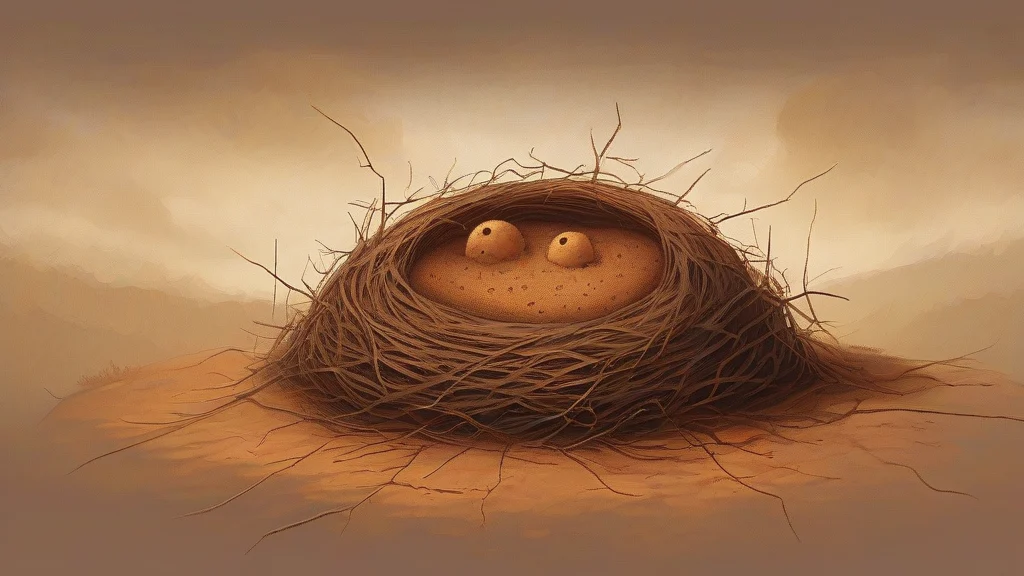
What does formicary mean?
A formicary is the nest of a colony of ants: a structured network of galleries and chambers that the insects excavate in soil, rotten wood, or under stones, often marked above ground by a mound of earth or fine debris. The word comes from medieval Latin formicarium, derived from formica, the Latin word for ant, and belongs chiefly to the vocabulary of entomology and natural history rather than everyday conversation, where 'anthill' or 'ant nest' predominates. In scientific writing, the term covers more than the visible mound — it encompasses the entire subterranean architecture of the colony, including nursery chambers, food stores, and ventilation shafts. A closely related term, formicarium, refers instead to a human-made enclosure such as an ant farm, so the two words are easily confused. For readers interested in the natural world, formicary is a precise and evocative way to describe one of the most familiar yet complex structures in the insect kingdom.
nounA formicary is a nest or mound made by ants, consisting of a network of galleries and chambers, typically built in soil, wood, or beneath stones.
- A nest built by ants, especially the visible mound of soil or debris marking an underground colony.
"The gardeners carefully worked around the large formicary at the edge of the flower bed."
"The field was dotted with formicaries, each one a bustling city hidden beneath the grass."
"Under the microscope, the structure of the formicary revealed an intricate labyrinth of tunnels and nurseries."
Standard plural; simply add -es to the singular form.
"Several formicaries dotted the sunlit meadow."
Every ant mound in your garden is a formicary — a name borrowed straight from the Latin word for 'ant', the same root that gave formic acid its sting-inspired name.
Reviewed by Deb Chak, Editor. AI-assisted content curated by RJS Tech Solutions LLP.
Etymology of formicary
Formicary derives from medieval Latin formicarium, itself formed from formica, the classical Latin word for ant. The same root gave rise to 'formic acid', named after the ants from which the acid was first isolated, and to 'formication', the medical term for a crawling sensation on the skin. The word entered English usage in the early modern period, when naturalists adopted Latinate terms for the structures and habits of insects.
Related word forms
How formicary is actually used
Formicary is a technical term used mainly in entomology and natural-history writing; in everyday speech people usually say 'anthill' or 'ant nest'. It carries a neutral, scientific connotation.
Easily confused with formicary
A formicarium is an artificial enclosure, such as an ant farm, built by humans to house ants, whereas a formicary is the nest the ants construct themselves.
Formication is the sensation of insects crawling on the skin, unrelated in meaning to a formicary despite sharing the same Latin root for 'ant'.