What does fortepiano mean?
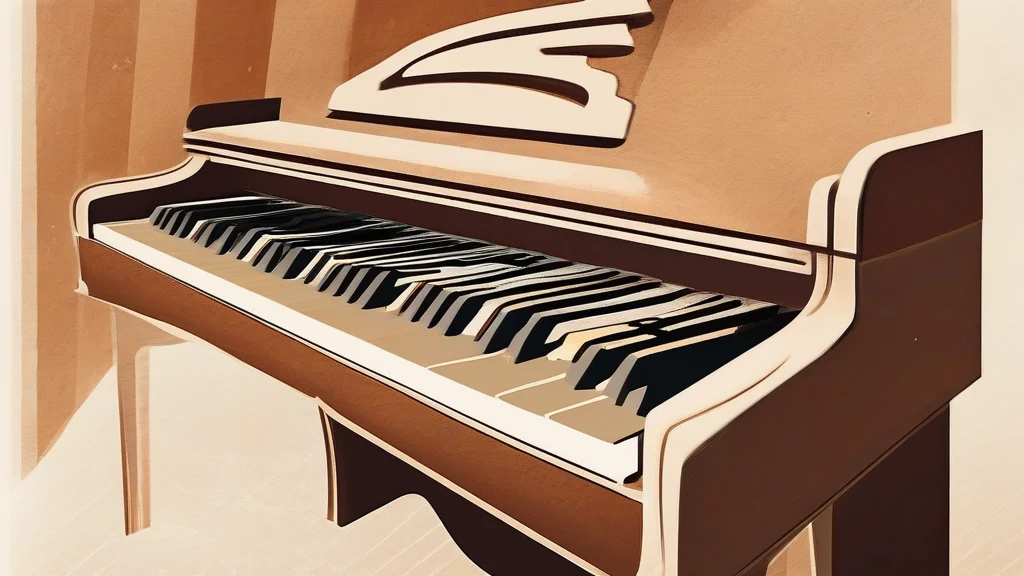
A fortepiano is the immediate ancestor of the modern piano: a keyboard instrument of the late eighteenth and early nineteenth centuries in which felted hammers strike strings, allowing the player to control dynamics through touch — the very innovation its Italian name celebrates, combining 'forte' (loud) and 'piano' (soft). Lighter and quieter than today's grand piano, typically wooden-framed and strung with thinner wire, it produces a crisper, more delicate tone. The instrument matters chiefly because Mozart, Haydn, and the young Beethoven composed for it, so musicians performing their music on fortepianos aim to recreate something closer to what those composers actually heard. Today the term appears mainly in classical music contexts — concert programmes, instrument workshops, and recordings devoted to historically informed performance — where it signals scholarly attention to period sound rather than everyday use.
nounAn early form of the piano, developed in the late 18th century, in which the strings are struck by hammers and the instrument can produce notes of varying loudness depending on how forcefully the keys are struck; it is the instrument for which Classical-era composers such as Mozart and Haydn wrote.
- The historical 18th- and early 19th-century keyboard instrument with hammered strings, ancestor of the modern piano, especially as used in historically informed performance of Classical-era repertoire.
"The concert opened with a Mozart sonata performed on a restored 1790s fortepiano."
"Mozart's piano concerto sounded strikingly crisp and intimate on the fortepiano rather than a modern grand."
"The museum's collection includes an 1802 fortepiano by the Viennese builder Graf."
Both plurals appear in music literature; 'fortepianos' follows English conventions, while 'fortepiani' preserves the Italian form and is favoured by some specialists.
"The festival featured three restored fortepianos spanning five decades of Viennese building."
'Fortepiano' literally reverses 'pianoforte' — the same two Italian words, forte (loud) and piano (soft), just flipped in order to describe the revolutionary keyboard that could do both.
Reviewed by Deb Chak, Editor. AI-assisted content curated by RJS Tech Solutions LLP.
Etymology of fortepiano
The word comes from Italian, formed from the musical terms 'forte' (loud) and 'piano' (soft), reflecting the instrument's defining ability to play at varying volumes. It derives ultimately from Latin roots — 'forte' from 'fortis' (strong) — and shares this lineage with related terms such as 'fortissimo' and 'pianoforte', the latter being the older name for the same family of instruments that later shortened to 'piano'. Historically, 'piano forte' was the earlier designation applied to Cristofori's invention in the early eighteenth century, with 'fortepiano' emerging as the preferred label for Viennese-style instruments of the later eighteenth century onward.
How fortepiano is actually used
The word is primarily used in classical music circles — performers, instrument builders, and historians — and carries connotations of authenticity and historical craft. In everyday speech most people simply say 'piano'; using 'fortepiano' signals specialist knowledge of period performance practice.
Easily confused with fortepiano
Pianoforte is the older name that eventually became simply 'piano', whereas 'fortepiano' specifically denotes early hammer-action keyboards of the 18th and early 19th centuries used in historically informed performance.
A modern piano has a cast-iron frame and far greater power and sustain than a fortepiano, which is lighter, quieter, and built with period materials.