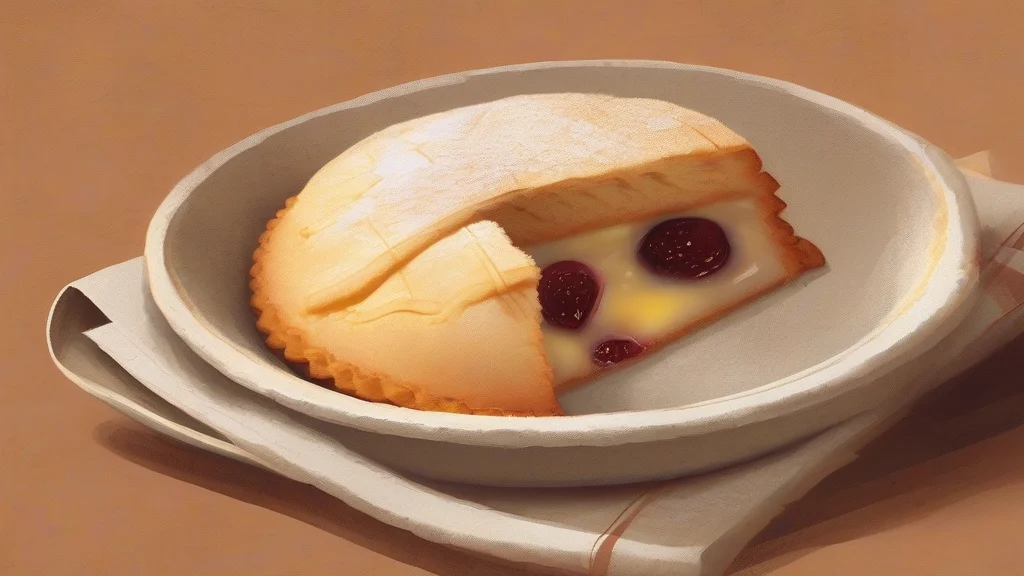
What does frangipane mean?
Frangipane is a rich, sweet filling used in European pastry-making, made by creaming together ground almonds, butter, sugar, and eggs, sometimes with a little flour or flavoring. When baked, it sets into a soft, moist cake-like layer with a pronounced almond flavor, forming the heart of classics such as the French galette des rois, the British Bakewell tart, and countless fruit tarts where it cushions fresh pears, plums, or berries. The word carries strong connotations of traditional patisserie and home baking, appearing mostly in cookbooks, recipe columns, and bakery menus rather than everyday speech. Although its name resembles frangipani, the tropical flower, the two are unrelated in meaning; both, curiously, derive their names from a sixteenth-century Italian nobleman famed for perfuming gloves with bitter almond. For bakers, knowing frangipane opens the door to an entire family of elegant, almond-scented desserts.
nounA sweet, creamy filling or paste made of almonds, butter, sugar, and eggs, used especially in pastries such as galette des rois and Bakewell tart.
- A creamy almond filling made from ground almonds, butter, sugar, and eggs, baked inside tarts and pastries.
"The baker spread a generous layer of frangipane over the pastry before arranging the poached pears on top."
"The Bakewell tart's layer of frangipane sits atop a thin spread of raspberry jam."
"For the galette des rois, she folded the frangipane between two rounds of puff pastry."
Rarely pluralized since the word usually refers to a single filling within one recipe or dish; when referring to multiple filled pastries, the pastries themselves are typically counted instead.
"The patisserie window displayed several pear frangipanes."
Frangipane is named after a 16th-century Italian marquis whose bitter-almond-scented gloves were so famous that both a pastry cream and a tropical flower ended up bearing his name.
Reviewed by Deb Chak, Editor. AI-assisted content curated by RJS Tech Solutions LLP.
Etymology of frangipane
Frangipane takes its name from the Italian Frangipani family, notably Marquis Muzio Frangipane, a sixteenth-century Roman nobleman who invented a bitter-almond-scented glove perfume that became fashionable across Europe. Confectioners later created an almond-flavored sweet echoing that scent, and the name attached itself to the cream; the term entered English usage in the seventeenth to eighteenth centuries. The same family name also became attached to the frangipani (plumeria) flower, giving English two very different words from one origin.
How frangipane is actually used
Frangipane is almost exclusively a culinary term, encountered in baking contexts and patisserie menus. It is distinct from marzipan and almond paste, though closely related; recipes vary in whether it is called a cream, filling, or paste. In French, the same preparation is often simply part of classic pastry terminology rather than a separately discussed ingredient.
Easily confused with frangipane
Frangipane is an almond-based pastry filling, while frangipani (also called plumeria) is a fragrant tropical flowering plant; both names trace to the same Italian family.