
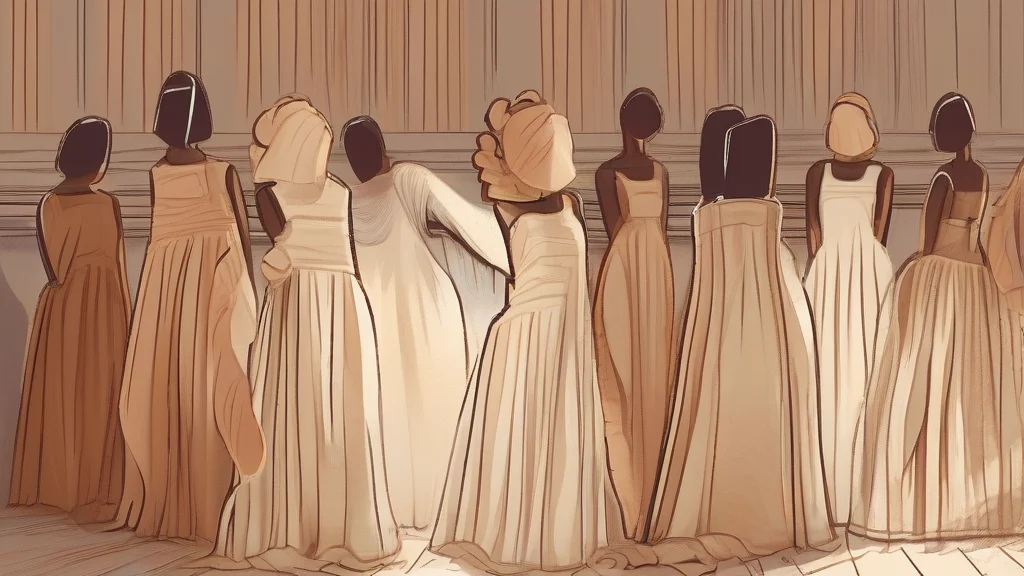
What does frilling mean?
Frilling refers to fabric that has been gathered or pleated into soft, wavy ruffles and applied as a decorative edge or trim — most often seen on garments such as collars, cuffs, and bodices, as well as on curtains, cushions, bed linen, and tableware coverings. It may describe both the ruffled material itself and the process of adding it, making it useful in sewing and upholstery contexts alike. The word belongs largely to the vocabulary of dressmaking and traditional home decor, and it carries a connotation of delicacy, ornamentation, and old-fashioned charm; a garment described as having frilling suggests romance or vintage styling rather than minimalism. Though less common today than its close cousin 'ruffle', frilling survives in British usage, in historical costume work, and in descriptions of heirloom textiles. Its enduring appeal lies in how precisely it names an effect: fabric coaxed into gentle waves purely for beauty.
A gathered or pleated ruffled trim of fabric, used to decorate garments, linens, or furnishings.
"The pillowcases were trimmed with a wide frilling of embroidered cotton."
Also used to refer collectively to the frills on an item, as in 'a gown heavy with frilling'.
The action or result of adorning something with frills; the ornamental effect produced by ruffling.
"Much patient frilling went into the christening gown."
Rarely pluralized; 'frilling' is most naturally treated as a mass or collective noun describing ruffled trim as a whole rather than counted item by item.
"The costume designer ordered several lengths of frillings from the haberdashery."
Before ruffles were called ruffles, seamstresses spoke of 'frilling' — a word that turns a strip of fabric into pure ornament.
Reviewed by Deb Chak, Editor. AI-assisted content curated by RJS Tech Solutions LLP.
Etymology of frilling
Frilling derives from 'frill', a term for a ruffled trim whose ultimate origin is uncertain, though it has been linked by etymologists to words denoting borders and edges such as 'fringe'. The noun form 'frilling' arose as a natural extension, naming the ruffled stuff itself and the practice of applying it, and became established in British sewing vocabulary during the nineteenth century, when ruffled trims dominated fashionable dress. It remains closely associated with its sibling forms 'frill' and 'frilly'.
Related word forms
How frilling is actually used
Frilling is chiefly used in sewing, dressmaking, and interior-decorating contexts and carries a distinctly old-fashioned, romantic connotation; in modern usage it appears far more often in British sources than American ones, where 'ruffle' tends to be preferred.
Easily confused with frilling
Trilling refers to the rapid alternation between two adjacent musical notes (a trill) or to the warbling sound of certain animals, whereas frilling refers to gathered ruffled fabric used as decoration.