
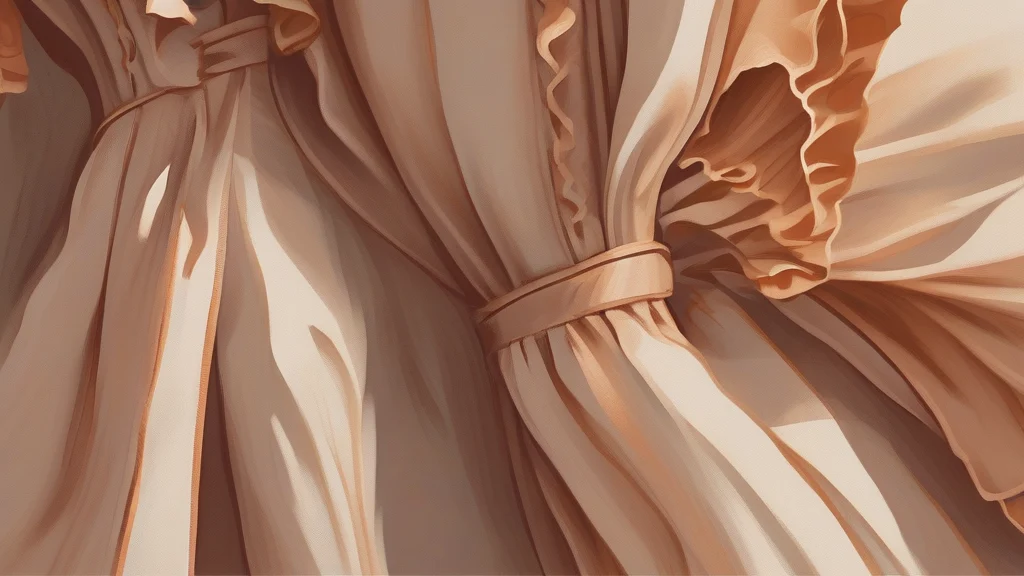
What does frill mean?
A frill is a strip of fabric that has been gathered, pleated, or flounced so that it ruffles outward, stitched onto garments, curtains, or linens purely as decoration. Over time the word took on a second, figurative life: anything showy, ornamental, and essentially unnecessary came to be called a frill, whether an extra button on a coat or an optional feature on a product. This extended meaning underlies the familiar phrase 'no frills,' which advertisers and consumers alike use to describe goods and services stripped down to bare functionality — budget airlines, basic bank accounts, plain packaging. Connotations therefore run in two directions: in fashion, a frill suggests charm, femininity, and craftsmanship; in commerce, frills imply wasteful expense. First recorded in English in the early seventeenth century, the word remains current in both registers, useful for describing everything from Victorian petticoats to minimalist pricing. Its double life — literal trim and figurative excess — makes it a compact lesson in how vocabulary absorbs metaphor.
A gathered, pleated, or flounced strip of fabric used as decorative trim; by extension, any superfluous or showy extra that serves ornament rather than function.
"Her wedding gown had rows of frills down the sleeves."
In the figurative sense, often used with negative connotation of excess; 'no frills' flips this into a selling point.
To provide or decorate with a frill or frills; also, of fabric, to form a ruffled edge.
"She frilled the edges of the apron by hand."
Now rare outside sewing and historical costume contexts.
The plural 'frills' is standard and also feeds the figurative phrase 'no frills.'
"The costume was covered in frills from collar to hem."
"No frills" has become shorthand for stripped-down efficiency — so thoroughly did this little ruffle come to symbolize everything unnecessary.
Reviewed by Deb Chak, Editor. AI-assisted content curated by RJS Tech Solutions LLP.
Etymology of frill
Frill entered English in the early seventeenth century as a term for a ruffled edging on clothing. Its ultimate origin is uncertain: it has been linked to Old French forms connected with ornamental edging, though no definitive source has been established, so its deeper ancestry remains unresolved among etymologists. Whatever its birthplace, the word quickly broadened beyond dressmaking, acquiring its figurative sense of any superfluous embellishment, a usage cemented by modern marketing language such as 'no-frills.' Because its origin is obscure, there are no firmly identified cognates in other languages.
Related word forms
How frill is actually used
Both the literal garment sense and the figurative 'superfluous extra' sense are common in everyday English. The figurative sense carries a mildly negative connotation of fussiness or needless extravagance, while the phrase 'no frills' signals austerity and value. The verb sense ('to frill') is now comparatively rare, appearing mostly in sewing and historical costume contexts.
Easily confused with frill
'Frail' means weak or easily broken, whereas 'frill' refers to decorative ruffled fabric or unnecessary extras — they merely sound and look somewhat alike.