What does gaggled mean?
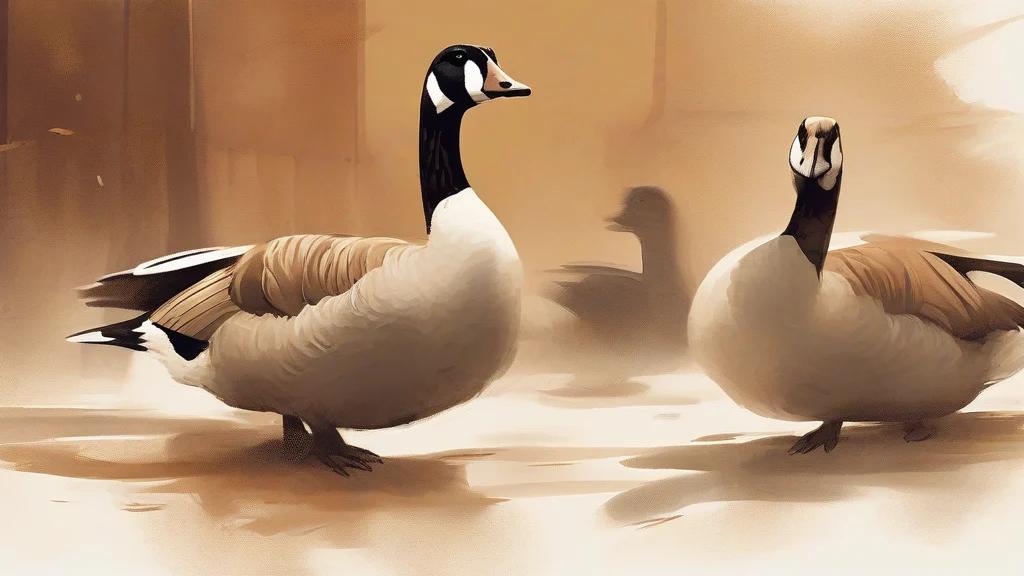
Gaggled is the past tense of gaggle, a verb that describes the distinctive cackling cry of geese. When geese gaggled across a farmyard or riverbank, they are making the loud, ragged calls that have given their flocks their very name — a 'gaggle' being the collective term for geese on the ground or water. Over time, the verb also acquired a figurative use: people who talk over one another in noisy, undignified clusters can be said to have gaggled much like the birds. Both senses carry a faintly comic, rural flavor, which is why the word tends to appear in descriptive, humorous, or nostalgic writing rather than formal prose. Rooted in imitation of animal sound rather than in any learned language, gaggled is a small piece of onomatopoeic folk vocabulary — a reminder that some of English's most charming words were borrowed not from Latin or Greek, but straight from the farmyard.
verbGaggled is the past tense of the verb 'gaggle', meaning made the harsh cackling cry characteristic of geese; it is also used figuratively to describe people chattering noisily or incessantly.
- (of geese) made the typical cackling cry of geese.
- (figuratively, of people) chattered or talked noisily and continuously.
"The geese gaggled loudly across the pond as we approached."
"The farmyard gaggled into life at dawn as the geese announced feeding time."
"The tourists gaggled excitedly in the museum lobby, comparing guidebooks."
Geese got their own verb before English even settled its spelling — when a flock falls silent in flight it's called a skein, but once they land and start up again, they've 'gaggled'.
Reviewed by Deb Chak, Editor. AI-assisted content curated by RJS Tech Solutions LLP.
Etymology of gaggled
The verb gaggle derives from Middle English, where it arose as an imitative word echoing the cackle of geese — the same onomatopoeic instinct that produced kin such as gabble and cackle. It is the verbal counterpart of the noun gaggle, the collective term for a group of geese, which developed along similar lines. Because the word was formed from direct imitation of sound rather than from classical roots, it has no Latin or Greek cognates; its closest relatives are other imitative bird-and-beast noises in English.
Related word forms
How gaggled is actually used
The literal use, describing geese, is the older and more common sense; the figurative application to human chatter is informal and somewhat whimsical. The word carries a mildly comic, rustic connotation.
Easily confused with gaggled
A giggle is a light, often suppressed laugh, whereas a gaggle is the harsh cackle of a goose or, figuratively, noisy chatter.
Cackle refers specifically to the sharp broken cry of a hen or a witch-like laugh, while gaggle denotes the call of geese.