
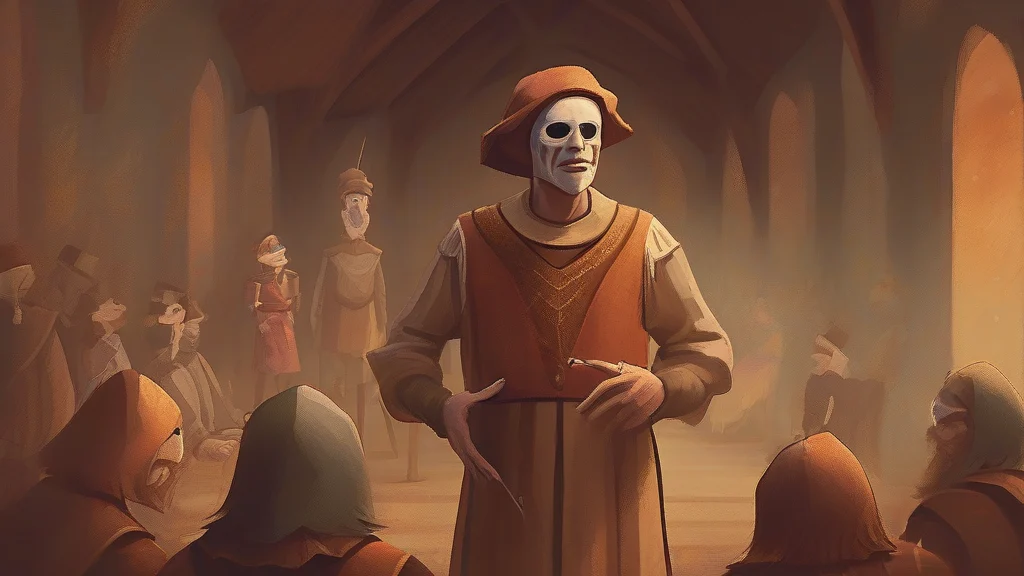
What does gleeman mean?
A gleeman was a singer and entertainer, especially in medieval and early modern England. The word is now largely historical or literary rather than a label for a modern occupation. In its best-known sense, a gleeman was a minstrel: someone who performed songs, often lively or popular ones, for nobles, villagers, or other patrons. The term can sometimes be used more broadly for a jester or other merry entertainer, but “minstrel” remains the clearest modern equivalent. Gleemen traditionally provided music, storytelling, and entertainment, making them recognizable predecessors of later ballad singers and folk performers. Although the noun survives in dictionaries and historical writing, it sounds distinctly archaic today and evokes a performer in a great hall, at a feast, or among travelers. It remains especially useful when reading about medieval and Tudor culture, where a gleeman might accompany dancing or entertain a gathering with traditional songs.
nounA gleeman was a professional singer and entertainer, especially in medieval or early modern England; a minstrel.
- A professional singer, musician, or entertainer, especially one who performed songs for medieval or early modern audiences; a minstrel.
"The gleeman entertained the wedding guests with ballads and a lively tune."
"The gleeman entertained the wedding guests with ballads and a lively tune."
"In the novel, the wandering gleeman sang of a king whose court had long since fallen silent."
The regular plural is gleemen, pronounced /ˈɡliːmən/ with the same stress and vowel sounds as the singular.
"Traveling gleemen performed for audiences across the countryside."
A gleeman was once a professional entertainer; today the word is mainly a doorway into the musical life of the medieval past.
Reviewed by Deb Chak, Editor. AI-assisted content curated by RJS Tech Solutions LLP.
Where does gleeman come from?
The English compound gleeman combines glee and man and originally denoted a singer of glees. The element glee derives from Old English glæd, meaning “joy, mirth, or entertainment,” and is related to glad. The compound developed into a historical term for a minstrel or other musical entertainer.
How gleeman is actually used
The word is now archaic or literary rather than a label for a modern occupation. It may suggest a traditional or courtly performer, although “minstrel” is the safest general synonym.