
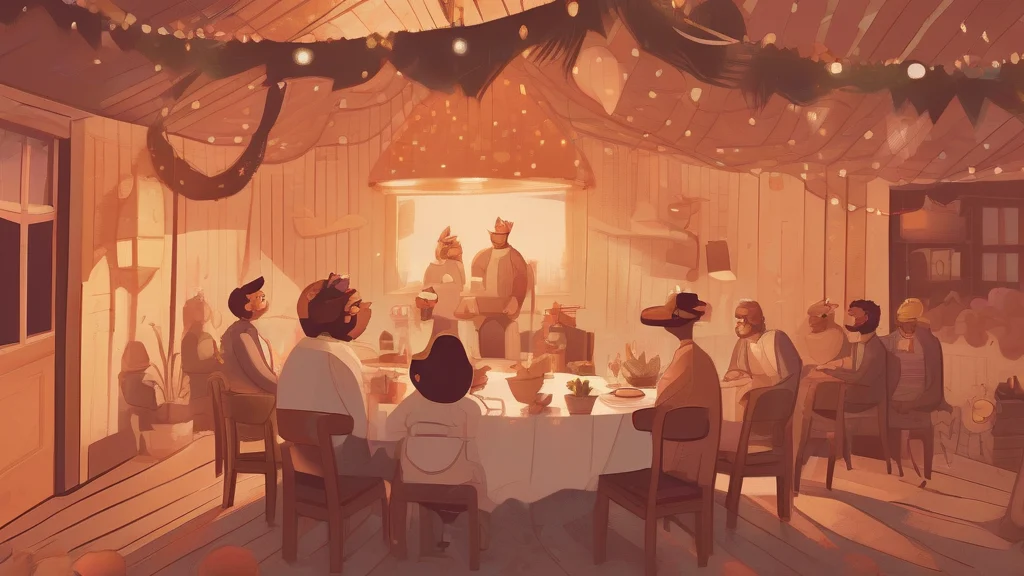
What does jollification mean?
Jollification means a celebration or festive gathering, especially one marked by conviviality, laughter, music, food, and drinking. The word is chiefly associated with British English and has a slightly old-fashioned, literary quality that gives it more warmth and colour than the neutral term “celebration.” It is often used when describing communal festivities, holiday gatherings, weddings, and other occasions on which people are openly merry and relaxed. Jollification also carries an implication of energetic enjoyment rather than quiet ceremony, so it would rarely describe a formal dinner, a restrained reception, or a solemn commemoration. Within a sentence, it helps establish an atmosphere of exuberance and social warmth. Its formation from “jolly” and the suffix “-ification” reinforces that association with cheerfulness and festivity. Although understood in American English, it sounds distinctly British and is much less common there than words such as “celebration” and “festivity.”
nounA celebration, festivity, or occasion of merrymaking. The word often suggests a lively, convivial gathering marked by eating, drinking, and general festivity.
- A celebration, festivity, or occasion of merrymaking.
"The village was filled with music, dancing, and jollification until well after midnight."
"The wedding was a joyful occasion, filled with laughter, music, and all the jollification of the season."
"He was in high spirits, looking forward to the jollification at the country house."
Usually countable when referring to a particular event; it may also be used uncountably for festive activity in general.
"The town was renowned for its summer jollifications, which drew visitors from across the county."
A distinctly British label for merrymaking, jollification makes celebration sound as though the jolly part of life has been officially scheduled.
Reviewed by Deb Chak, Editor. AI-assisted content curated by RJS Tech Solutions LLP.
Where does jollification come from?
Jollification was formed in the 19th century from “jolly,” meaning merry or cheerful, together with the suffix “-ification,” which creates a noun denoting an action or condition. Jolly itself has Germanic roots and reached English through Old French, ultimately relating to a Latin family of words associated with pleasantness, merriment, and play. This relationship is reflected in cognates such as “jollity,” “jocund,” and “jocular.”
How jollification is actually used
Chiefly British and somewhat old-fashioned or literary. It usually conveys a convivial, exuberant celebration and is less neutral than “party” or “celebration”; it is not normally used for a solemn or private gathering.