
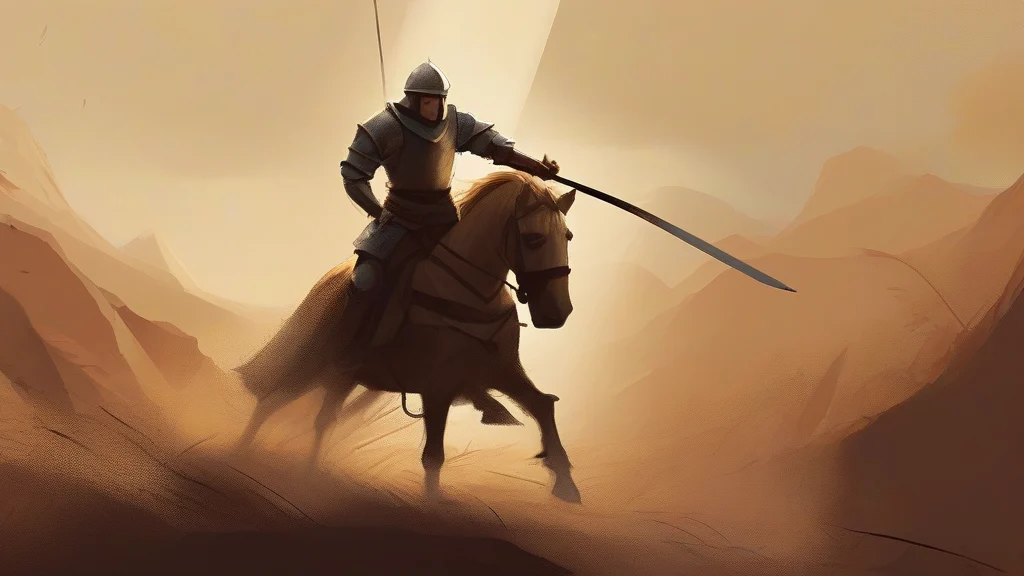
What does lancer mean?
A lancer is a mounted soldier who fights with a lance, a long spear designed for use by cavalry. The word most often refers to soldiers in historical light-cavalry units, whose tactics emphasized speed, formation, and the impact of a concentrated charge. The lance could be used to thrust at an opponent or to deliver a powerful blow from horseback, making it especially associated with early modern and nineteenth-century warfare. Although the expression may sound like a general synonym for cavalryman, it has a narrower historical meaning and is now encountered mainly in historical writing, museums, and the names or traditions of former regiments. Understanding “lancer” also helps distinguish the soldier from the “lance,” the weapon carried into battle.
nounA lancer is a mounted soldier armed with a lance, especially one belonging to a historical unit of light cavalry. The term is also used for certain cavalry units organized around the lance.
- A mounted soldier armed with a lance, especially a member of a historical light-cavalry unit.
- A member of a cavalry unit historically organized and equipped for lance combat.
"The lancers charged across the field in a disciplined line."
"A lancer rode at the head of the troop as the signal sounded."
"The museum displayed the armor and weapons of a lancer from the nineteenth century."
The plural is used for groups of lance-armed cavalrymen and for members of a lancer unit.
"The lancers paraded through the town in full uniform."
Lancers helped make cavalry history: their massed charges used the lance as both weapon and symbol of a rapidly changing age of warfare.
Reviewed by Deb Chak, Editor. AI-assisted content curated by RJS Tech Solutions LLP.
Where does lancer come from?
“Lancer” comes through French lancier, from Old French lancier, meaning a soldier who carries a lance. The word ultimately relates to the Germanic root behind “lance,” a word that entered English through Old French. Related forms include the medical “lancet,” a small surgical instrument named for its lance-like shape, and “lanceolate,” describing leaves that taper toward both ends.
Related word forms
How lancer is actually used
The word is chiefly historical, literary, or used in the names and traditions of former cavalry units. In modern usage, it is uncommon as a general term for a cavalryman.
Easily confused with lancer
A lancer is the cavalry soldier who carries and uses a lance, whereas a lance is the long spear itself.