
What does mandolin mean?
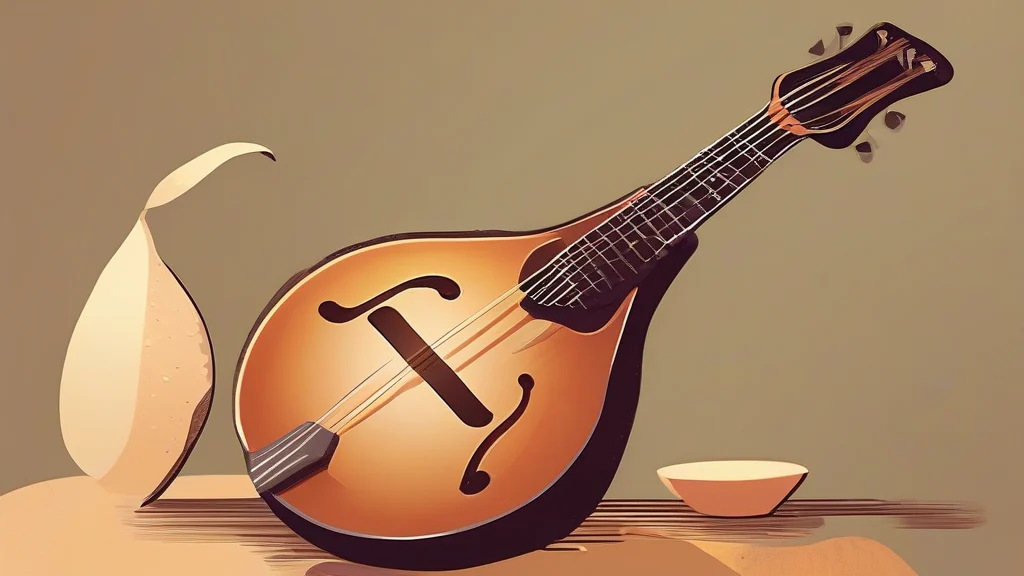
A mandolin is a fretted, stringed musical instrument with a hollow, pear-shaped body, a short neck, and usually four or more courses of strings. It is played by plucking or strumming, producing a clear, ringing tone that can be especially effective in ensemble playing. The instrument is strongly associated with Italian and European folk traditions, as well as with bluegrass, folk, country, and classical music. Its bright sound and relatively portable size have also made it a familiar feature of traditional music and popular culture. Although the modern mandolin has a distinctive body shape and tuning, it belongs to a broader family of plucked string instruments that includes lutes and related forms. The word is used regularly in British and American English for both the instrument and its sound or performance, and it remains a useful term for describing the instrument's distinctive place in folk and traditional music.
nounA stringed musical instrument with a fretted neck and a hollow, pear-shaped body, usually with four or more courses of strings. It is commonly associated with folk, bluegrass, classical, and traditional music and is typically played by plucking or strumming.
- A fretted stringed instrument with a hollow, pear-shaped body, played by plucking or strumming its strings.
"She played the mandolin accompaniment to the old folk song."
"The band added a mandolin to its folk and bluegrass sound."
"In the programme notes, the composer referred to the instrument's bright, tremulous tone as a 'mandolin'."
The regular plural is mandolins, used for multiple instruments or for an ensemble of mandolin players.
"The shop sells vintage mandolins and replacement strings."
The mandolin's compact, pear-shaped body and rapid strumming make it an unlikely but unmistakable star of folk and bluegrass music.
Reviewed by Deb Chak, Editor. AI-assisted content curated by RJS Tech Solutions LLP.
Where does mandolin come from?
The word comes through French from Italian mandolino, a diminutive of mandola meaning a larger lute. Mandola in turn derives from Latin pandura, the name of an ancient plucked string instrument associated with Greek pandoura. Related English forms include mandola, bandore, bandora, and pandura, reflecting the shared history of European lute and plucked-string instruments.
Related word forms
How mandolin is actually used
The term is standard in both British and American English. In musical contexts, it normally refers to the modern fretted instrument descended from European and Italian lutes; it can also be used more broadly for related historical forms.
Easily confused with mandolin
Mandolin is the standard spelling in modern English, while mandoline is a less common variant spelling of the same instrument.