
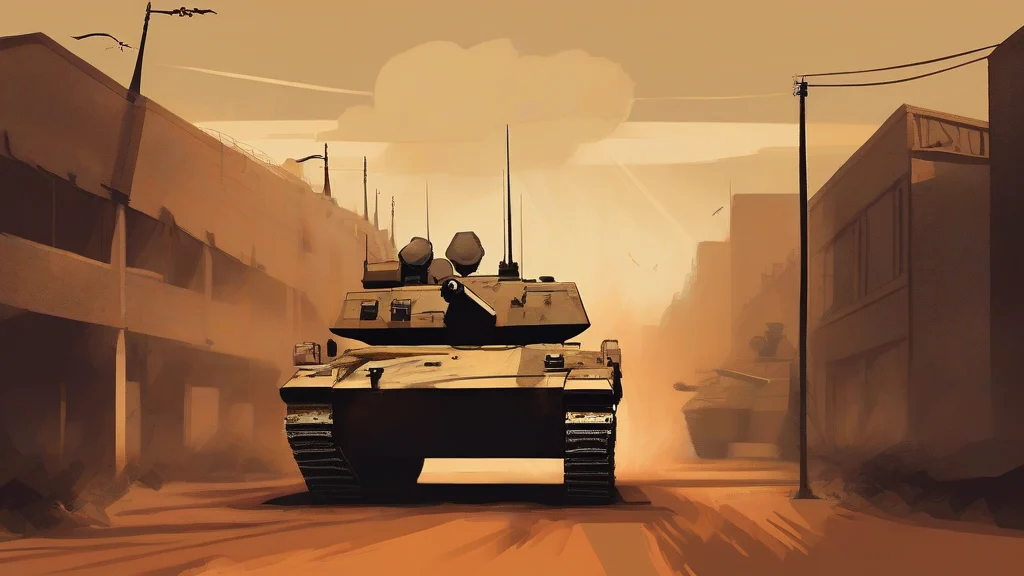
What does militarisation mean?
Militarisation is the process of making something more military or of extending military thinking into civilian life. It may describe the expansion and reorganisation of armed forces, the provision of military equipment and training to other agencies, or the increasing influence of military values and methods on government and society. The term often carries a critical or cautionary implication, suggesting that peaceful or civilian functions are becoming militarised. It is related to, but distinct from, militarism, which is an attitude or doctrine that gives military power special importance, and mobilisation, which is the practical act of assembling people and resources. In contemporary discussion, militarisation is frequently applied to defence policy, policing, border security, and international relations. The word is particularly associated with debates about arms races, military alliances, and the use of military tactics in civilian contexts.
nounThe process of making something military, especially by giving it military organisation, equipment, training, or priorities. It can also refer to the spread of militaristic attitudes into civilian life.
- The process of making an organisation, institution, or country more military in structure, equipment, training, or priorities.
- The process by which military attitudes, methods, or priorities spread into civilian institutions or everyday public life.
"The government's increased defence spending has accelerated the militarisation of public security."
"The debate over the new missile system centred on the wider militarisation of the region."
"Academic critics warned that increasing reliance on armed police represented a militarisation of ordinary public order."
The plural is used when referring to separate processes of becoming more military.
"The report examined the militarisations of police and border-control agencies."
Militarisation can transform more than an army: it can reshape how an entire society understands security, conflict, and authority.
Reviewed by Deb Chak, Editor. AI-assisted content curated by RJS Tech Solutions LLP.
Where does militarisation come from?
Militarisation is a British-spelled derivative of militarise, which in turn comes from military. Military derives from Latin militaris, meaning “of soldiers” or “pertaining to war,” from miles, a soldier. The suffix -isation reflects the process of making or becoming something, a formation modelled on related French and Latin-derived words. The American spelling militarization uses the standard -ization ending, while the meaning developed from the general concept of organising or equipping for military purposes to include the spread of military attitudes into civilian institutions.
Related word forms
How militarisation is actually used
The word is often critical when describing the expansion of military power or the adoption of military methods in civilian settings. The British spelling is standard in British English; the North American spelling is militarization.
Easily confused with militarisation
Militarisation is the process of making an institution or society more military, whereas mobilisation is the act of assembling people or resources for action, especially military action.
Militarisation describes a process of becoming more military, while militarism is a doctrine, policy, or attitude that places military power or values in a prominent position.