
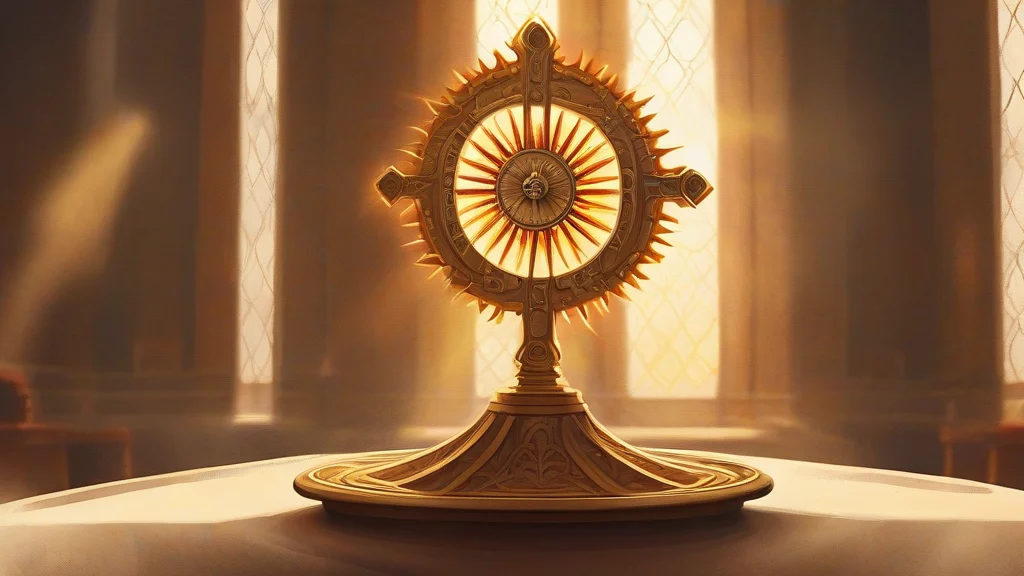
What does monstrance mean?
A monstrance is a decorative vessel, traditionally made of precious metal, used to display a consecrated Eucharistic host in the Roman Catholic Church. The host is placed behind glass or crystal so that it can be seen and honored by worshippers. Monstrances may be kept on an altar, especially when the host is displayed for adoration, or carried in religious processions. The word is closely associated with elaborate gold or silver craftsmanship, ceremonial use, and the public presentation of the consecrated host. Although it is sometimes loosely translated as a reliquary, a monstrance specifically displays the Eucharistic host rather than a physical relic of a saint. It is most frequently encountered in Catholic churches and in descriptions of religious art, liturgical ceremonies, and processions.
nounA Monstrance is an ornate, often gold or silver vessel in which a consecrated Eucharistic host is displayed for veneration, especially in a Catholic church. It may stand on an altar or be carried in a procession.
- An ornate vessel used to display a consecrated Eucharistic host for veneration, particularly in the Roman Catholic tradition.
"The cathedral's jeweled monstrance was carried reverently through the crowded church during the Corpus Christi procession."
"The priest placed the consecrated host in the monstrance before the congregation."
"A procession of children carried flower-decorated monstrances along the village streets."
The plural is used when referring to more than one vessel of this kind.
"The two monstrances were carried at the front of the procession."
A monstrance turns the Eucharistic host into a jewel-like object of sight and devotion.
Reviewed by Deb Chak, Editor. AI-assisted content curated by RJS Tech Solutions LLP.
Where does monstrance come from?
Monstrance comes through Medieval Latin from Latin monstrans, a form of monstrans meaning “showing” or “displaying.” The underlying verb monstrare, meaning “to show,” is also the source of English words such as demonstrate and manifest, and gave rise to monster through the Latin noun monstrum, originally associated with something displayed or portentous. In English, the term developed in a specifically religious sense for a vessel used to display the consecrated Eucharistic host.
Related word forms
How monstrance is actually used
The word is chiefly associated with Roman Catholic worship and is less common in Protestant usage. It refers specifically to a vessel for displaying the consecrated host, rather than to a general container or display case.