
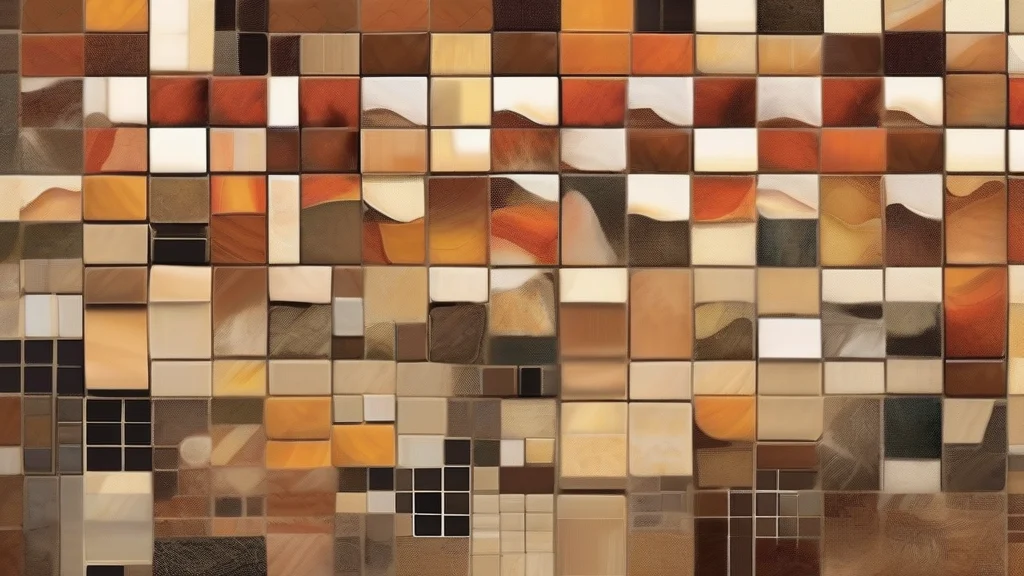
What does mosaic mean?
A mosaic is a design assembled from many small pieces of material, most often coloured tiles, glass, stone, or ceramic. The pieces may depict a figure, pattern, or scene, and the finished work can cover a floor, wall, ceiling, or other surface. The word also has a figurative sense: a “mosaic” of people, images, events, or experiences is a varied collection whose individual elements contribute to a larger whole. This usage often emphasizes diversity, although it can suggest a fragmented or divided society. As an adjective, mosaic describes both the material assembled in this way and patterns formed from many different elements. The verb “mosaic” is less common and means to create such an arrangement. Mosaic art has a long history, especially in the ancient Mediterranean and Byzantine architectural tradition, where intricate images were produced from thousands of small pieces of coloured material.
A design or work of art made from small pieces of coloured material fitted together; also, by extension, a varied collection of elements forming a larger whole.
"A Roman mosaic decorated the floor of the villa."
The figurative sense commonly denotes diversity within a larger composition and sometimes carries the connotation of fragmentation.
Made from or arranged as a mosaic; composed of numerous diverse elements.
"The museum has restored the mosaic ceiling in its central hall."
Often used in fixed expressions such as “mosaic floor,” “mosaic ceiling,” and “mosaic art.”
To make, decorate, or compose something in the form of a mosaic.
"The artist mosaicked the courtyard with brightly coloured tiles."
This use is relatively uncommon; “make a mosaic” or “decorate with mosaic tiles” may sound more natural.
The plural is used for individual decorative works or for separate figurative collections or compositions.
"The gallery displays Roman mosaics found beneath the nearby church."
The word mosaic ultimately refers to the Muses, the ancient Greek goddesses associated with the arts, because its early form meant “of the Muses.”
Reviewed by Deb Chak, Editor. AI-assisted content curated by RJS Tech Solutions LLP.
Where does mosaic come from?
The word entered English through Medieval Latin mosaicum, a term associated with the art of making designs from small pieces of stone or glass. It derives from Greek mosaikos, “of the Muses,” from mousa, “Muse,” reflecting an early association with the arts. The modern sense developed as the technique became especially prominent in Roman and Byzantine decorative art.
Related word forms
How mosaic is actually used
In figurative use, “mosaic” usually suggests diversity within a unified whole. It can be slightly negative when used of a city or society to imply fragmentation or sharp social divisions. The adjective is commonly used in compounds such as “mosaic floor,” “mosaic ceiling,” and “mosaic art.” The verb is relatively uncommon and means to make or form something as a mosaic.
Easily confused with mosaic
A mosaic is a design assembled from small pieces, whereas a massa is a form of prepared dough or plaster.