
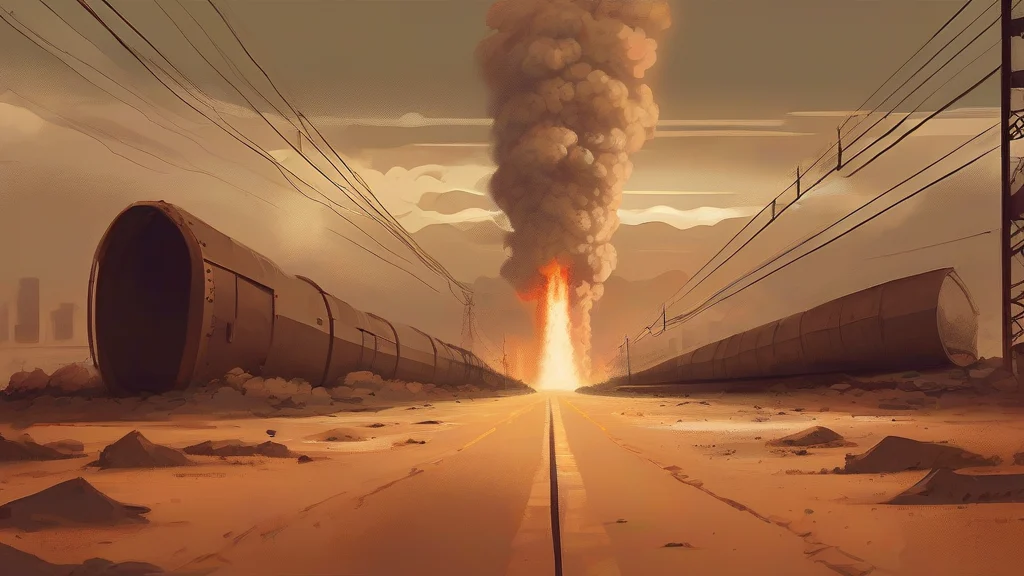
What does nuking mean?
“Nuking” is the present participle of “nuke,” a verb meaning to destroy something utterly, especially by means of nuclear weapons. Its figurative use is more common in informal contexts: to nuke a business, website, plan, or reputation is to ruin it so completely that it cannot continue functioning as before. The expression is vivid and often humorous, but its imagery is extreme, so it may sound deliberately sensational or unsuitable in measured or sensitive writing. For example, a sudden change in strategy might be described as nearly nuking an entire project. In professional or formal prose, alternatives such as “destroy,” “devastate,” or “wreck” will usually convey the intended meaning without the dramatic nuclear comparison. The word also retains its original literal meaning, particularly in discussion of warfare, nuclear strategy, and nuclear weapons.
verbTo destroy completely, especially with nuclear weapons. It is also commonly used figuratively to mean that something has been ruined or eliminated.
- To destroy completely with nuclear weapons.
- To ruin, obliterate, or eliminate something, especially in a forceful or unsparing way.
"The campaign threatened to nuke the entire industry overnight."
"The missiles were capable of nuking the target before dawn."
"The new design team nearly nuked the project with one poorly timed revision."
From the same idea as nuclear weapons, “nuking” has evolved into a vivid, if alarming, metaphor for destroying something so completely that it cannot recover.
Reviewed by Deb Chak, Editor. AI-assisted content curated by RJS Tech Solutions LLP.
Where does nuking come from?
The verb “nuke” is a colloquial shortening of “nuclear,” applied originally to nuclear weapons and destruction. “Nuclear” comes from Latin nucleus, meaning “kernel” or “nut,” a development associated with the central part of an atom. English later adopted the related scientific terms “nucleon” and “nucleonics” from the same Latin root.
Related word forms
How nuking is actually used
“Nuking” is informal in its figurative use and often conveys sudden, total destruction rather than ordinary damage. The literal military sense is serious and may sound technical or hyperbolic when used outside a nuclear context.