
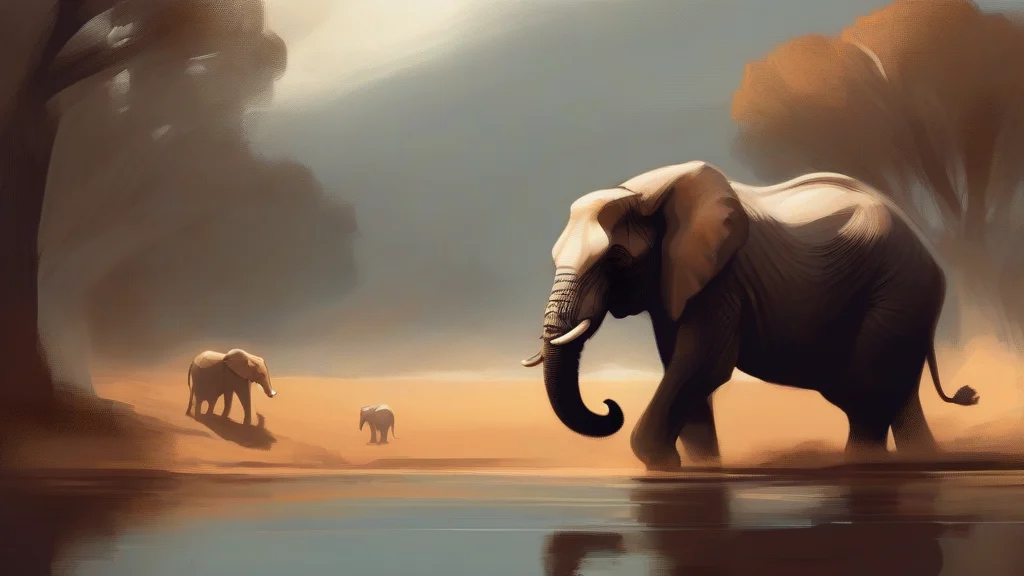
What does oliphant mean?
An oliphant is an old word for an elephant, surviving mainly in medieval literature, poetry, and modern fantasy. It may also mean an ivory horn made from an elephant tusk, usually treated as a hunting horn or trumpet. The term has a strongly archaic and romantic quality, so it often suggests the world of chivalric romances, heroic legends, and imagined medieval pageantry rather than ordinary contemporary life. In the famous medieval story of Roland, the oliphant is Roland’s extraordinary horn, capable of producing a blast that carries across great distances and signals distress. The word comes through Old French from Latin, ultimately from Greek. Although it is not normally used for the living animal today, it remains a vivid piece of historical vocabulary, especially in descriptions of medieval artifacts, epic literature, and fantasy settings.
nounAn elephant, especially in medieval romance or other archaic literary contexts. The word can also denote an ivory horn, particularly a hunting horn or trumpet made from an elephant tusk.
- An elephant, especially in archaic or literary usage.
- An ivory horn, especially a medieval hunting horn or trumpet made from an elephant tusk.
"The poet described the oliphant as a symbol of strength and warning."
"The old song tells of a warrior with an oliphant hanging from his shoulder."
"A museum curator displayed a carved and gilded oliphant from the medieval period."
Used for multiple elephants or for multiple ivory horns, depending on the sense.
"The collection includes several carved oliphants from the medieval period."
In the medieval romance of Roland, the hero's oliphant is a magical ivory horn whose blast can summon allies and reveal distant threats.
Reviewed by Deb Chak, Editor. AI-assisted content curated by RJS Tech Solutions LLP.
Where does oliphant come from?
The word entered Middle English from Old French olifant, a form reflecting Latin elephantus. Latin elephantus came from Greek elephas, referring to the animal and also to ivory. The sense for an ivory horn developed because elephant tusks were valued for making instruments and ornaments. English speakers later adopted the form oliphant, which became especially prominent in medieval romance and remained known through works such as the Song of Roland.
How oliphant is actually used
The word is chiefly literary, historical, or specialized rather than part of ordinary modern English. In modern writing it often conveys an archaic, romantic, or fantastical atmosphere. The pronunciation varies between British /ˈɒlɪfənt/ and American /ˈɑlɪfənt/.
Easily confused with oliphant
An oliphant may refer poetically or archaically to an elephant, but it can also refer specifically to an ivory horn made from an elephant tusk.