
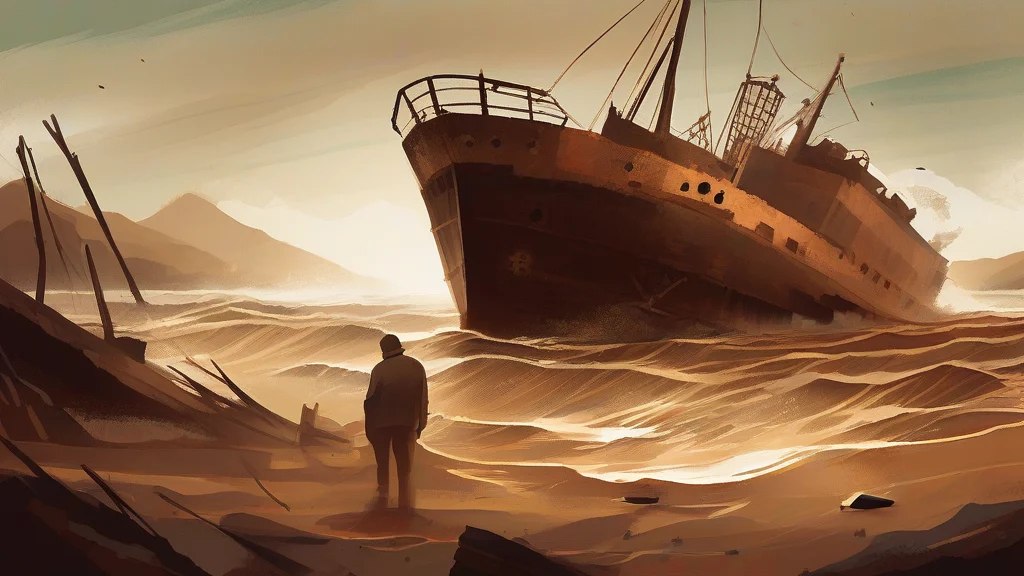
What does shipwrecking mean?
Shipwrecking is the activity of destroying a ship or causing it to become wrecked. The word is especially associated with deliberate acts because a vessel is deliberately sunk to obtain an insurance payment, salvage, or some other illicit benefit. Such schemes have a long history and are closely associated with maritime fraud. The term can also describe a shipwreck occurring in fiction, film, or historical narrative without necessarily implying criminal intent. As a verb form, shipwrecking is the present participle of shipwreck and normally carries the same emphasis on causing destruction. The word is more specific than terms such as sinking because a wreck may involve loss of control, grounding, collision, or another maritime disaster. It is also more accusatory than the noun shipwreck, which can simply name the ruined vessel or the incident itself.
The act or process of destroying a ship or causing it to be wrecked, especially for an improper or fraudulent purpose.
"He was accused of shipwrecking the fishing boat to claim the insurance money."
Usually an uncountable noun. The plural shipwreckings is uncommon and is chiefly appropriate for separate incidents or cases.
The present participle of shipwreck: to destroy a ship or cause it to be wrecked.
"The crew were charged with shipwrecking the vessel and staging a false distress call."
This verbal use normally implies deliberate action.
The plural is uncommon; shipwrecking is ordinarily used as an uncountable noun for the activity or process.
"The archive documented two separate shipwreckings along the coast during that winter."
Before shipwrecking became familiar from disaster films and adventure stories, it was a calculated crime: sinking an insured vessel for profit.
Reviewed by Deb Chak, Editor. AI-assisted content curated by RJS Tech Solutions LLP.
Where does shipwrecking come from?
Shipwrecking is an English formation built from ship and wreck. The compound shipwreck is attested from the early 17th century, while wreck itself entered Middle English from Old Norse in a Germanic word family associated with breaking or destruction. Adding the suffix -ing created a form expressing the activity of wrecking a ship, and the fraudulent sense developed from historical practices of deliberately destroying insured vessels.
How shipwrecking is actually used
The word commonly suggests deliberate destruction and may therefore sound accusatory. As a noun, it is normally treated as an uncountable activity; as a verb, it is the present participle of shipwreck.
Easily confused with shipwrecking
A shipwreck is the wrecked vessel or the resulting incident, whereas shipwrecking denotes the activity of destroying or causing a ship to be wrecked.