
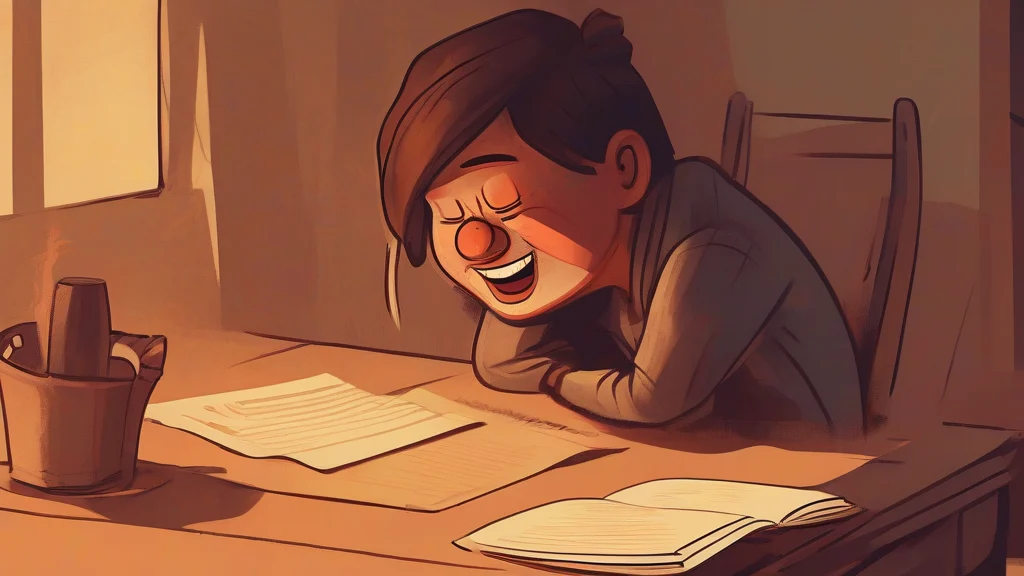
What does sniggering mean?
“Sniggering” means laughing in a suppressed or half-suppressed manner. It often suggests that the person laughing is amused by something they may not want others to notice, and it can carry a faintly derisive or mocking tone. The word is commonly used for quiet laughter in classrooms, conversations, or situations in which an open laugh would be inappropriate: for example, students might be described as “sniggering in the back row.” In British English, “sniggering” is especially common, while American speakers more often use the closely related word “snicker.” The distinction from “giggling” is mainly one of tone: giggling usually suggests playful or lighthearted amusement, whereas sniggering more often implies secrecy, embarrassment, or ridicule.
verbTo laugh in a suppressed or half-suppressed way, often with a sense of derision or embarrassment.
- To laugh in a suppressed or half-suppressed way, especially with derision or embarrassment.
"Several students began sniggering when the speaker misunderstood the question."
"He tried to look serious, but he was sniggering throughout the performance."
"The group fell silent when the teacher noticed them sniggering in the back row."
A snigger is a laugh that tries to stay hidden, but often reveals more about the listener than the joke.
Reviewed by Deb Chak, Editor. AI-assisted content curated by RJS Tech Solutions LLP.
Where does sniggering come from?
The base verb “snigger” appeared in the late nineteenth century and is generally regarded as imitative in origin, formed to suggest a small or suppressed laugh. Related words such as “snicker” and “titter” also developed through imitative formations in the same period, reflecting similar speech sounds associated with quiet laughter.
Related word forms
How sniggering is actually used
The word is somewhat formal in British English and especially common in British and Commonwealth usage. In American English, “snicker” is more common, and it often carries a stronger suggestion of mockery or ridicule.
Easily confused with sniggering
A giggle is generally a light, often playful laugh, whereas a snigger is more subdued and can suggest mockery or embarrassment.