
What does stook mean?
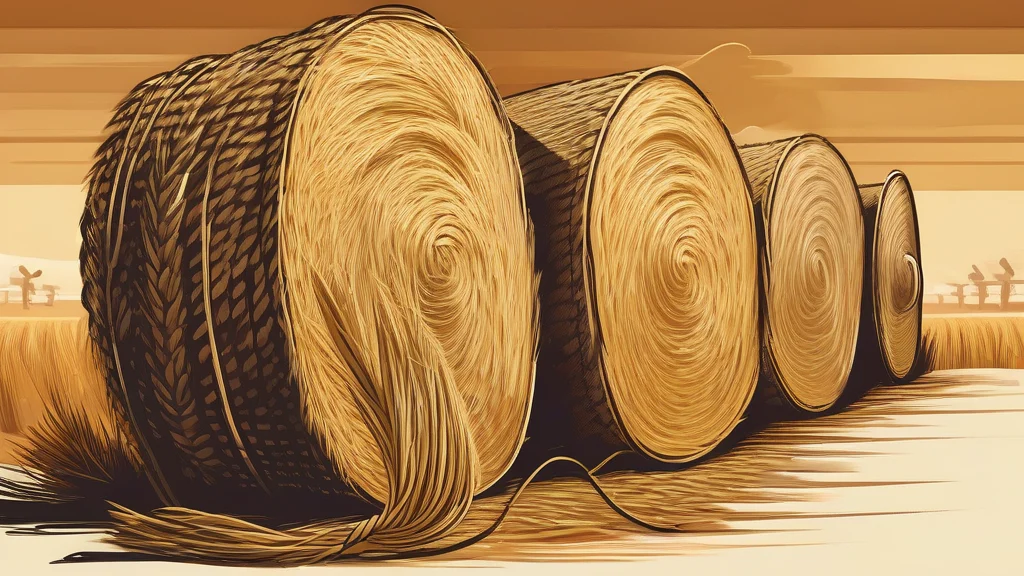
A stook is a stack of sheaves of grain, traditionally assembled in a field after harvesting and left standing until threshing or transport. The word is chiefly associated with Scotland and northern England and has an old-fashioned, agricultural character, so it is much less common in everyday modern English than words such as “stack” or “bundle.” A stook usually consisted of several sheaves arranged together, with the cap or covering protecting the grain from rain. Although “sheaf” can refer to an individual bundle, “stook” more precisely refers to the larger arrangement of several sheaves. The word also appears more broadly for stacks of harvested material, especially hay. Its regional distribution makes it a useful example of how vocabulary connected to traditional farming survives unevenly across English-speaking regions.
A stack or bundle of sheaves of grain, especially wheat, traditionally made after harvesting.
"The men built a stook of barley beside the field gate."
Chiefly used in Scotland and northern England; elsewhere it is uncommon and may sound archaic.
To arrange harvested sheaves of grain into a stook.
"The crew spent the afternoon stooking the wheat."
This is a regional agricultural verb, now uncommon in general English.
The plural is formed by adding -s; the word is chiefly used in Scotland and northern England.
"Several stooks stood in the stubble after the harvest."
Before threshing, a stook was the haystack-sized village of grain waiting to be processed.
Reviewed by Deb Chak, Editor. AI-assisted content curated by RJS Tech Solutions LLP.
Where does stook come from?
The word is chiefly associated with Scots and northern English agricultural usage. Its precise medieval origin is not securely established in standard etymological references, although the term developed within the older vocabulary of harvesting and grain handling. In English, it retained a narrow regional meaning connected with stacks of harvested sheaves.
Related word forms
How stook is actually used
The word is chiefly regional and agricultural. It is more familiar in Scotland and parts of northern England than in standard southern English or American English, where it may sound archaic or unusual.
Easily confused with stook
A stook is a stack of harvested grain sheaves, whereas a stoke is a unit of heat or the act of feeding or tending a fire.