
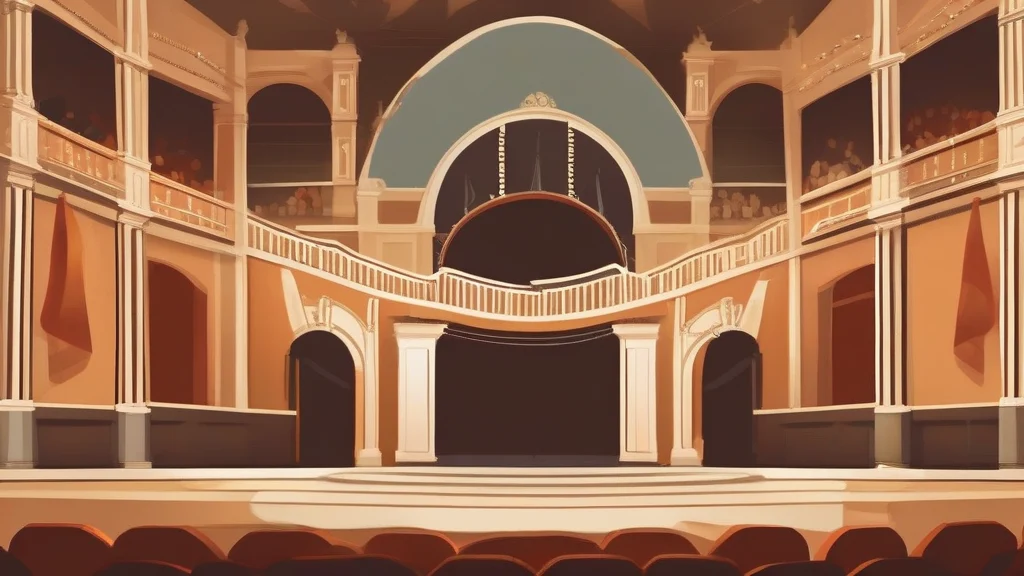
What does theatre mean?
Theatre is a noun meaning a venue where plays, operas, dance, and other dramatic performances take place, as well as the dramatic arts collectively. The common modern sense is the first: a theatre is both a physical building and a cultural institution with its own performers, audiences, and traditions. When used figuratively, as in theatre of war or theatre of operations, it means a scene or sphere in which events, conflict, or strategic activity unfolds. The word also has a specialised British medical sense in operating theatre, referring to a room equipped for surgery. In general use, theatre often carries connotations of live performance, cultural activity, and public spectacle, and it is frequently contrasted with cinema or television when referring to forms of dramatic entertainment. The spelling theatre is standard in British English, while the American spelling is theater.
nounA building or venue where plays, operas, dance, and other dramatic performances are presented. By extension, it can mean the dramatic arts collectively or a scene or sphere of activity.
- A building, room, or venue where plays, operas, dance, and other dramatic performances are presented.
- The dramatic arts collectively, especially live performance.
- A scene or sphere of activity, especially conflict or events, as in a theatre of operations.
- A room or department in a hospital equipped for surgery, especially in British English, as in an operating theatre.
"The play transferred from the theatre to a touring production."
"We spent the evening at the theatre watching a new play."
"The campaign became a theatre of political intrigue."
In British English the standard plural is theatres; the American spelling uses theaters.
"Several theatres were closed for refurbishment."
From the Greek for a place for seeing, theatre began as a space in which audiences watched performances unfold.
Reviewed by Deb Chak, Editor. AI-assisted content curated by RJS Tech Solutions LLP.
Where does theatre come from?
The English word theatre comes through Old French from Latin theatrum, which in turn derives from Greek theatron, a place for viewing or seeing. The Greek root is associated with seeing and with dramatic performances before the public. Its related forms include theatrical and theatrics, which preserve the same historical association with drama and performance.
Related word forms
How theatre is actually used
The collective sense is formal and is especially associated with live dramatic performance. In medical contexts, operating theatre is chiefly British. In figurative compounds, the word denotes an arena or field of action rather than a performance venue.
Easily confused with theatre
Theatre is the standard spelling in British English, while theater is the standard spelling in American English; the pronunciation differs correspondingly.