
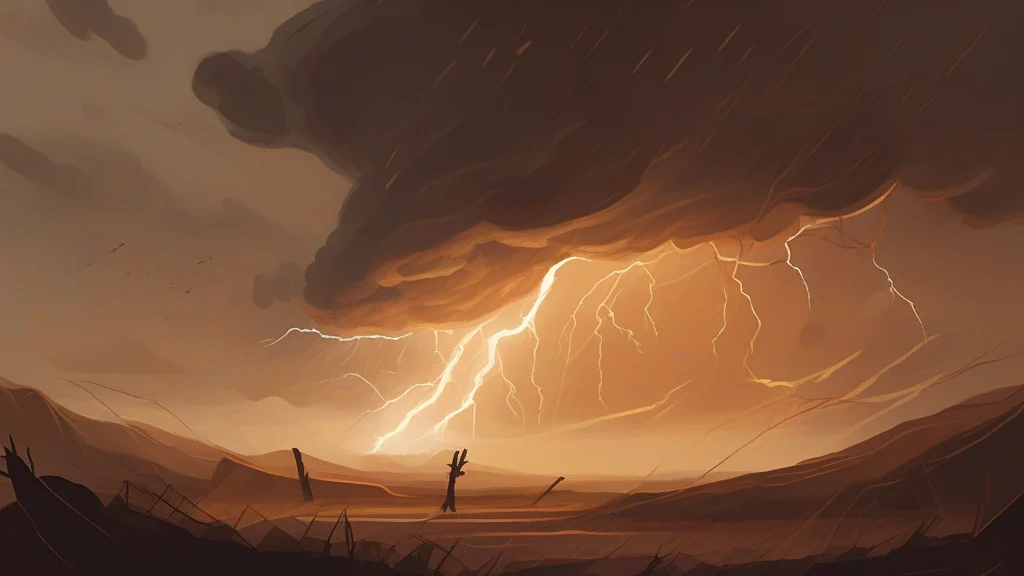
What does thunder mean?
Thunder is the rumbling, rolling, or crashing sound produced by lightning. Because the sound can travel much farther than the flash that causes it, thunder may be heard after the lightning itself has disappeared, especially when a storm is still some distance away. In figurative use, thunder describes language, movement, or power that is loud, forceful, and potentially intimidating. A voice that thunders is not necessarily speaking quietly or politely; it suggests booming volume, authority, or anger. The related verb “to thunder” can mean either to produce a deep rumbling sound or to speak with great force. Thunder is familiar in descriptions of storms and dramatic speech, but it also carries a sense of awe and natural power. Its sound is commonly represented with rolling or crashing imagery, making it a useful word for conveying both weather and intensity.
The loud rumbling or crashing sound produced by lightning; figuratively, a forceful or overwhelming display of anger, authority, or power.
"A crack of thunder shook the windows."
The atmospheric sense is usually treated as uncountable, although “thunders” can refer to distinct occurrences or sounds.
To make a deep, loud, rumbling sound; to speak or act with great force, especially in anger.
"The senator thundered against the proposed legislation."
The figurative verb is relatively formal and conveys force, anger, or intimidating volume.
Usually “thunder” is uncountable. The plural is possible for separate occurrences of the sound or distinct figurative expressions, such as repeated bursts of anger.
"Distant thunders echoed across the valley."
Thunder is not the lightning itself—it is the sky's booming soundtrack to a flash that may strike miles away.
Reviewed by Deb Chak, Editor. AI-assisted content curated by RJS Tech Solutions LLP.
Where does thunder come from?
The English word descends from Old English þunor, meaning “thunder” or “a loud noise.” It developed from Proto-Germanic *þunraz and is related to words in other Germanic languages, including German Donner and Old Norse þunr. Its deeper ancestry is commonly connected with a Proto-Indo-European root associated with roaring or making a loud sound. Over time, the word expanded from the natural sound of lightning to figurative expressions of overwhelming noise, force, and anger.
Related word forms
How thunder is actually used
The atmospheric sense is normally uncountable. The verb is commonly literary or forceful: “thunder against” means to condemn or oppose angrily, while “thunder at” someone indicates a loud, intimidating manner.
Easily confused with thunder
Lightning is the electrical discharge or visible flash, whereas thunder is the sound produced by that discharge.