
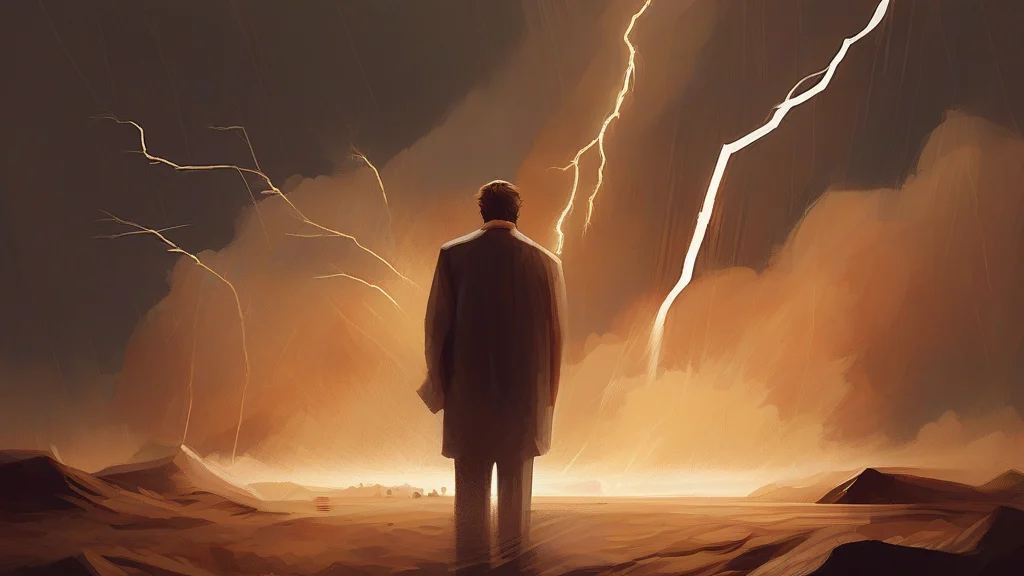
What does thunderstruck mean?
Thunderstruck means overwhelmed by astonishment, amazement, or wonder to the point of being momentarily stunned. The expression is idiomatic and often appears in predicative form, as in “The audience was thunderstruck,” rather than as a conventional adjective placed before a noun. It carries a vivid, dramatic quality: astonishment is imagined like a physical blow from a thunderclap, making the moment feel sudden, overwhelming, and often difficult to process. Although now chiefly informal or literary, thunderstruck occurs in British and American English and is especially useful when an event leaves people speechless. It is stronger and more colourful than simply being surprised, while sharing ground with astonished, astounded, and awestruck. The word is often modified by an intensifier such as absolutely or completely, and “thunderstruck by” introduces the cause of the astonishment. Overall, it concisely captures not just surprise but the stunned reaction that follows a startling revelation or remarkable sight.
adjectiveOvercome with astonishment, amazement, or wonder to the point of being stunned or momentarily unable to respond.
- Overwhelmed with astonishment, amazement, or wonder.
"She was thunderstruck by the news that the lost manuscript had finally been found."
"The audience was thunderstruck by the pianist's unexpected final performance."
"News of the peace agreement left the negotiators thunderstruck."
Thunderstruck turns a bolt from the sky into a vivid metaphor for the moment reality leaves you speechless.
Reviewed by Deb Chak, Editor. AI-assisted content curated by RJS Tech Solutions LLP.
Etymology of thunderstruck
Thunderstruck is an English compound formed from thunder and strike, and it dates to the early nineteenth century. It developed from the idea of being struck by thunder and, figuratively, being overwhelmed with wonder. The second element is the English verb strike, continued unchanged from Old English strican, while related English compounds such as thunderstorm and thunderclap preserve the same thunder element.
How thunderstruck is actually used
Informal and literary in tone. It is especially natural as a predicative adjective following a form of “be,” as in “They were thunderstruck,” and is often modified by an intensifier such as “absolutely” or “completely.”